
A furnace usually starts asking for retirement before it fully quits. Maybe the upstairs is colder than it used to be, the unit is running longer, or your winter gas bills keep climbing without a clear reason. If you are wondering how to choose home furnace options without getting buried in jargon or pushed toward the biggest model on the page, the goal is simpler than it seems: find the right size, the right efficiency, and the right fit for your home and budget.
For homeowners in Toronto and the GTA, that decision matters because winter is not forgiving. A furnace that is too small can struggle on colder nights. One that is too large can short cycle, waste energy, and wear out faster. The best choice is rarely the most expensive unit. It is the one that matches your house, your comfort needs, and the way you plan to stay in the home.
How to choose home furnace without overpaying
The fastest way to get off track is to shop by price alone. Upfront cost matters, of course, but furnace value comes from the full picture – installation quality, efficiency, warranty coverage, and whether the unit is actually sized correctly.
A low-priced furnace can become expensive if it is installed poorly or if it drives higher monthly heating costs for the next 15 years. On the other hand, the highest-efficiency model is not automatically the right call either. In some homes, the energy savings justify the upgrade. In others, a mid-efficiency or standard high-efficiency option may be the better balance.
This is why furnace selection should start with the home, not the sales sheet.
Start with the right furnace size
Sizing is the most important part of the process. Many homeowners assume a bigger furnace means better heat. It usually does not. An oversized furnace can heat the house too quickly, shut off, then restart again and again. That stop-and-start pattern can leave rooms unevenly heated and put extra strain on components.
An undersized furnace has the opposite problem. It may run for long periods and still struggle to maintain temperature during a cold snap.
The right size depends on more than square footage. A proper recommendation should also consider insulation levels, window quality, ceiling height, ductwork, air leakage, and whether you have a finished basement. Older Toronto homes often behave very differently from newer builds in Vaughan or Markham, even if the square footage looks similar on paper.
If someone gives you a furnace size without asking about the home itself, that is a reason to slow down.
Why a heat loss calculation matters
A heat loss calculation estimates how much heat your home needs during winter conditions. This gives a much better sizing baseline than rough rules of thumb.
It is not the most glamorous part of buying a furnace, but it is the part that helps prevent expensive mistakes. Proper sizing supports comfort, lower operating costs, and better equipment life.
Choose the efficiency that makes sense
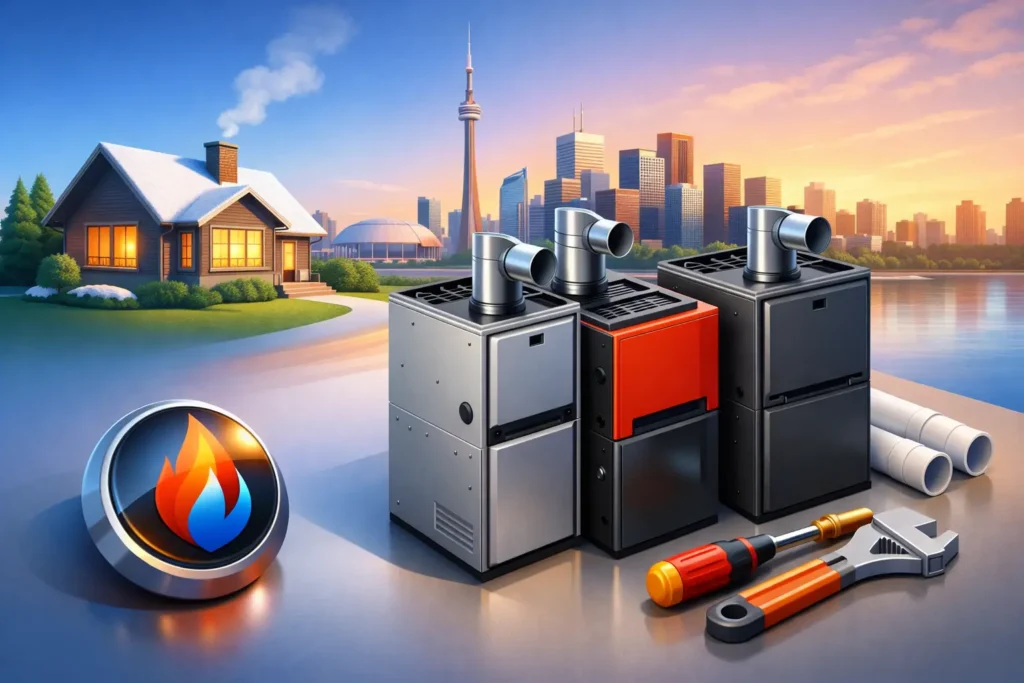
Most homeowners replacing a furnace today are looking at high-efficiency gas furnaces. These systems are designed to convert more fuel into usable heat, which can lower monthly energy bills.
That said, the highest AFUE rating is not always the best fit. If you plan to stay in your home for many years, paying more upfront for greater efficiency may make good financial sense. If you expect to move sooner, the payback period may be less compelling.
There is also the question of your current system and home setup. Some efficiency upgrades may require venting changes, drainage considerations, or additional installation work. That does not make them a bad option, but it does affect total project cost.
For many GTA homeowners, the best decision sits in the middle: a dependable high-efficiency furnace from a known manufacturer, installed properly, with clear warranty coverage and no surprises.
Fuel type and what most GTA homeowners choose
For most houses in Toronto and surrounding areas, a gas furnace is the standard replacement choice. Natural gas is widely available, heating performance is strong, and operating costs are generally practical for our climate.
Electric furnaces do exist, but they are less common in this market for whole-home heating because operating costs can be higher. In some homes, a heat pump paired with a furnace can also be worth considering, especially for homeowners looking to improve efficiency and reduce gas usage across more of the year.
If you are replacing only the furnace, though, gas remains the straightforward option for many detached, semi-detached, and townhouse properties across the GTA.
How to compare furnace features
Once size and efficiency are narrowed down, features become the next decision point. This is where homeowners can get overwhelmed, because every feature sounds essential when it is framed as an upgrade.
In reality, some features matter more than others depending on your home.
A single-stage furnace is the simplest option. It is either on or off. These systems can work well, especially for budget-focused replacements, but temperature swings may be more noticeable.
A two-stage furnace offers more flexibility. It can run at a lower output during milder demand and switch higher when needed. For many homeowners, this improves comfort and reduces some of the harsh starts and stops of a basic system.
Variable-speed blowers can also improve airflow, comfort, and overall system performance. They may help with more even temperatures from room to room and can pair well with central air conditioning.
If your home already has hot and cold spots, noisy airflow, or uneven heating between floors, these features may be worth more to you than they would be in a smaller, simpler layout.
Installation quality matters as much as the furnace itself
A good furnace installed badly is still a bad result. This is one of the biggest reasons homeowners end up disappointed after replacement.
Installation affects airflow, safety, venting, drainage, gas connections, thermostat performance, and long-term reliability. Even the best equipment will not perform properly if the setup is rushed or the ductwork issues are ignored.
That is why it helps to work with a company that explains what is included before work begins. Clear installation scope, certified technicians, and visible warranty terms matter. So does knowing who to call if something needs adjustment after the job is done.
For homeowners comparing quotes, ask what is actually included. One price may cover full installation, disposal of old equipment, required venting updates, and permit-related work, while another may leave key items out until later.
Budget, value, and what not to cut
Most furnace purchases come down to balancing upfront cost with long-term value. That balance is different for every household.
If your current furnace failed unexpectedly, budget may lead the conversation. That is understandable. In that case, focus first on correct sizing, safe installation, and a dependable model from a reputable category. Fancy features can wait. The basics should not.
If you are planning ahead rather than replacing during an emergency, you have more room to compare operating costs, feature upgrades, and warranty protection.
One place not to cut corners is labour coverage and post-install support. A furnace is not a box you plug in. It is a major home comfort system. If service is needed after installation, responsive support matters just as much as the equipment brand on the sticker.
How to choose a home furnace if your house has comfort issues
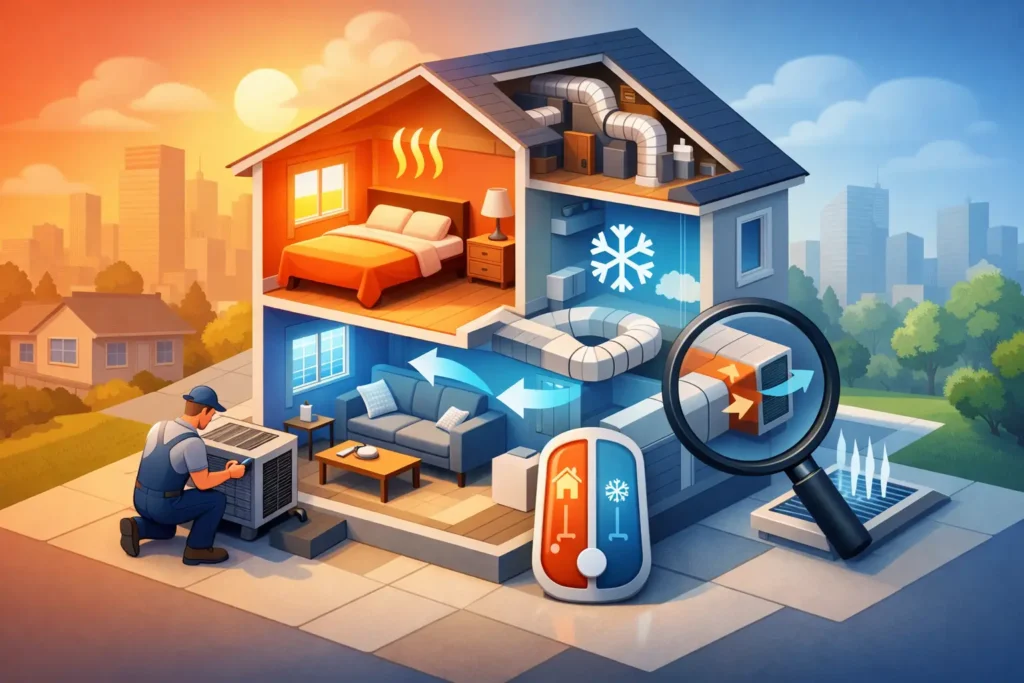
If certain rooms are always colder, do not assume the furnace itself is the only answer. Sometimes the real issue is duct design, airflow restriction, insulation gaps, or thermostat placement.
Replacing the furnace may help, but it may not fix the full problem on its own. That is why the best recommendations usually include a look at the heating system as a whole.
For example, a larger furnace will not necessarily solve a weak airflow problem to an upstairs bedroom. In some cases, it can make cycling worse without improving comfort where you actually feel the issue.
This is where a straightforward contractor earns trust – by pointing out what the furnace can solve and what it cannot.
A practical way to make the final decision
If you are down to two or three furnace options, compare them on these terms: proper size for the home, efficiency level, comfort features, installation scope, warranty coverage, and total installed price. Not just equipment price.
That usually reveals the strongest choice quickly. The right furnace is the one that fits your house, fits your budget, and comes with a clear installation plan from a team that will stand behind the work. Easy Breezy HVAC takes that approach because homeowners should be able to see what they are buying, understand why it is being recommended, and feel confident before installation day.
A new furnace should make your home feel simpler, not more complicated. If the recommendation is clear, the pricing is transparent, and the system matches the way your home actually heats, you are probably looking at the right one.