A central air unit that is too small will run hard, struggle on the hottest days, and leave parts of the house feeling sticky. One that is too large can cool too quickly, shut off too soon, and miss the real job of summer comfort – removing humidity. If you’re wondering how to size central air, the right answer is not just about square footage. It is about matching the system to your actual home.
Why central air sizing matters more than most homeowners think
Many homeowners start with a simple question: how many tons of AC do I need for my house? That makes sense, but tonnage is only part of the picture. Central air sizing affects comfort, monthly energy costs, humidity control, noise levels, and even how long the equipment lasts.
In Toronto and across the GTA, summers can bring heat waves, high humidity, and big temperature swings between shaded and sun-exposed rooms. A correctly sized system helps keep temperatures steady without overworking the equipment. That usually means fewer comfort complaints and fewer surprises on your utility bill.
This is also where a lot of replacement projects go off track. Homeowners sometimes assume the old unit size must be correct because it was there for years. In reality, older systems were often oversized, and the home itself may have changed with new windows, added insulation, or a finished basement.
How to size central air: square footage is only the starting point
You will often see rough rules like 20 to 30 BTUs per square foot or broad charts that pair home size with AC tonnage. Those can be useful for a quick estimate, but they should never be the final answer.
For example, a well-insulated 2,000 square foot home in Markham may need a different system than a draftier 2,000 square foot home in Brampton with older windows and strong afternoon sun. The homes are the same size on paper, but not in how they gain and hold heat.
A rough estimate might look something like this:
- 1.5 tons for a smaller home or condo
- 2 tons for a modest detached or semi-detached home
- 2.5 to 3 tons for many average family homes
- 3.5 to 5 tons for larger homes with more cooling load
That said, these are only ballpark figures. Choosing equipment based only on these ranges is where oversizing and undersizing often happen.
What professionals actually look at
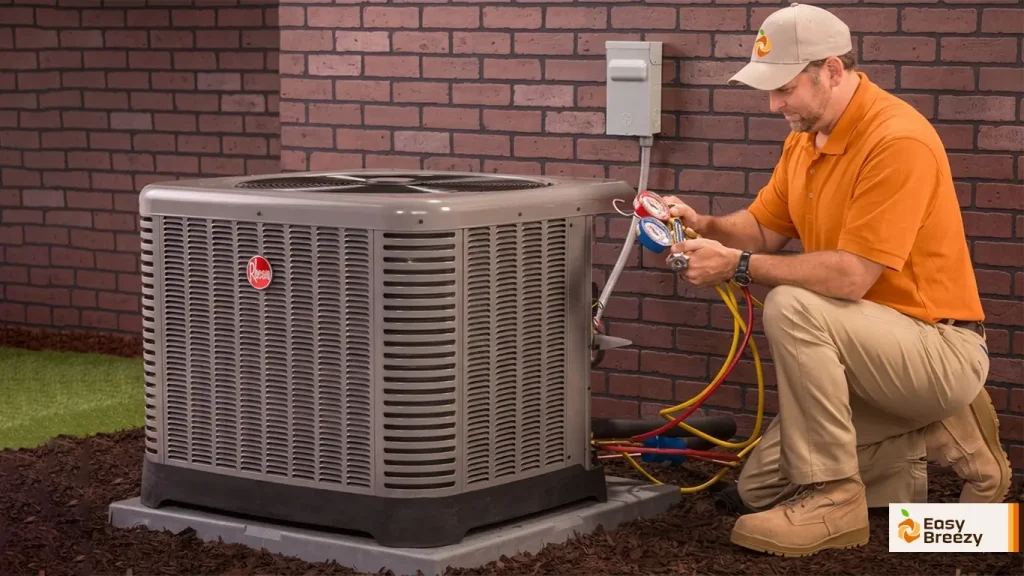
The proper way to size central air is with a load calculation. You may hear this called a heat gain calculation or Manual J style assessment. The goal is to measure how much cooling your home needs under design conditions, not just how big the house is.
A technician will usually consider the home’s total square footage, ceiling height, window size and direction, insulation levels, air leakage, number of occupants, and whether the basement is conditioned. They will also look at ductwork, because even a correctly sized air conditioner can perform poorly if the ducts are undersized, leaking, or poorly balanced.
Sun exposure matters more than many people expect. A home with large west-facing windows can build up heat late in the day and need more cooling capacity than a similar home with more shade. Kitchens, upper floors, and rooms over garages also tend to run warmer.
If you have recently upgraded attic insulation, replaced old windows, or sealed air leaks, that can lower your cooling load. In some cases, the right replacement unit may actually be smaller than the one you have now.
BTUs and tonnage explained simply
Air conditioners are usually sized in BTUs per hour and tons. One ton of cooling equals 12,000 BTUs per hour. So a 2-ton unit provides 24,000 BTUs per hour, while a 3-ton unit provides 36,000 BTUs per hour.
That number is about cooling capacity, not physical weight. It tells you how much heat the system can remove from the home. Bigger is not automatically better. A larger unit may cool the air quickly but stop before it has enough runtime to pull moisture out effectively.
That is why homeowners sometimes say, “My house feels cool, but still damp.” In many cases, the system is oversized or the airflow setup is not right.
What happens when central air is too small
An undersized unit tends to run for long periods, especially during extreme heat. Longer runtimes are not always bad on their own, since steady operation can help with humidity control. The real problem is when the system simply cannot keep up.
You may notice that indoor temperatures creep up in the late afternoon, second floors stay warm, and the thermostat never quite reaches the setpoint. That puts extra strain on the equipment and can lead to higher wear over time.
In older GTA homes with limited insulation or leaky ductwork, undersizing can be especially noticeable during humid stretches when both sensible heat and moisture removal become harder to manage.
What happens when central air is too large
Oversizing is often more common than undersizing. Some installers size up “just to be safe,” but that can create its own comfort problems.
An oversized air conditioner cools the home too quickly and then shuts off. This short cycling means less dehumidification, more temperature swings, and more starts and stops on key components. The house may hit the thermostat setting fast, but it can still feel clammy.
Short cycling can also increase equipment wear and reduce efficiency in real-world use. So while a bigger system may sound stronger, it often delivers worse comfort.
Ductwork can change the answer
If you’re learning how to size central air, it helps to know that the outdoor unit is only half the system. Your ductwork has to move enough air to match the cooling capacity.
A larger unit connected to undersized or poorly designed ducts will not perform the way it should. You might hear more noise, get weak airflow in some rooms, or deal with uneven temperatures from floor to floor. In some cases, duct problems make homeowners think they need a bigger AC when the real issue is air distribution.
This matters a lot in older Toronto homes where duct systems may have been designed for heating first and cooling second, or altered over time through renovations.
Heat pumps and central air sizing
If you are comparing a traditional air conditioner with a heat pump, the sizing process is similar, but the overall design may need a closer look. A heat pump handles cooling and also contributes to heating, so the recommended size may depend on how the system will be used through the year.
For many homeowners, the best answer depends on the home, the ductwork, and whether there is still a furnace in the system. The right recommendation should be based on comfort and efficiency, not a one-size-fits-all sales pitch.
Can you size central air yourself?
You can estimate, but you should not make a final buying decision based on an online calculator alone. Homeowners can gather useful details like square footage, window count, insulation upgrades, and the age of the current system. That helps you ask better questions and compare quotes more confidently.
Still, a proper in-home assessment gives a much clearer answer. It reduces the risk of paying for the wrong size, especially when installation is a major investment.
A trustworthy contractor should be willing to explain why they recommend a certain tonnage, what assumptions they used, and whether your ductwork supports that choice. If someone gives you a system size in minutes without asking about windows, insulation, layout, or airflow, that is a sign to slow down.
A practical way to approach replacement
If your current AC is aging, breaking down, or struggling in summer, start with the problem you are actually trying to solve. Is the home not cooling enough? Is humidity the bigger complaint? Are there hot upstairs bedrooms? Are energy bills climbing?
Those answers help shape the sizing conversation. The right system should fit your home as it is now, not as it was twenty years ago. At Easy Breezy HVAC, that means looking at the home, explaining the options clearly, and matching equipment to real comfort needs instead of pushing a larger unit because it sounds impressive.
When central air is sized properly, the difference shows up in the everyday details. The house cools evenly, humidity stays under control, and the system runs the way it should. If you’re replacing old equipment, the best next step is not guessing bigger or smaller – it is making sure the numbers match the home.