A failing air conditioner rarely chooses a convenient time to quit. It is usually during a humid Toronto heat wave, when the system is running constantly and your home is already uncomfortable. This guide to replacing old air conditioner equipment will help you make a clear decision before an emergency forces a rushed one.
For most GTA homeowners, the right replacement is not simply the same size unit installed in the same spot. Your home, ductwork, insulation, cooling needs, electrical setup, and budget all affect which system will deliver dependable comfort. A qualified assessment should turn those details into practical options, not a confusing sales pitch.
When replacing your old air conditioner makes sense
Age is a useful starting point. Central air conditioners commonly last about 12 to 15 years, although regular maintenance, installation quality, and how hard the unit has worked can shorten or extend that range. An older system is not automatically due for replacement, but repairs deserve closer scrutiny once the equipment is beyond its expected service life.
Replacement may be the more sensible choice when your AC needs frequent repairs, struggles to cool rooms evenly, makes new or unusually loud noises, or causes summer hydro bills to climb. A major component failure, such as a compressor or evaporator coil problem, can be expensive to repair on an aging unit. If the system uses an older refrigerant that is difficult or costly to source, repair options may also be limited.
There is no single rule that applies to every home. A modest repair on a well-maintained 10-year-old unit may be worthwhile. On the other hand, putting significant money into a 17-year-old system that has already needed several repairs can mean paying twice in a short period. Ask for the repair cost, the likely condition of the remaining components, and the cost of a properly installed replacement so you can compare the real options.
Start with the right size, not the biggest unit
An oversized air conditioner can cool the house quickly but still leave it clammy. That happens because it shuts off before running long enough to remove adequate humidity. It can also cycle more often, creating extra wear. An undersized unit may run for long periods on hot days without reaching the temperature you set.
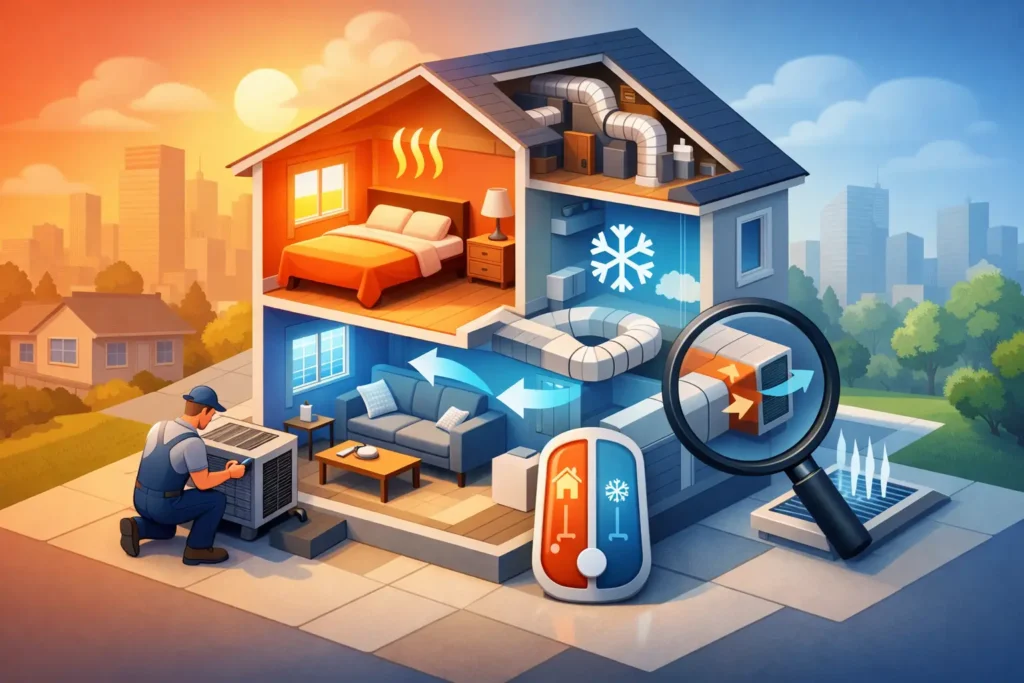
Proper sizing is based on more than square footage. A technician should consider your home’s layout, window exposure, insulation levels, ceiling height, air leakage, occupants, and existing ductwork. A finished basement, large west-facing windows, or a top-floor bedroom that gets afternoon sun can all change the cooling load.
If your old system seemed to work poorly, do not assume the solution is a larger replacement. The issue may be restricted airflow, leaky ducts, poor return-air design, a dirty evaporator coil, inadequate attic insulation, or a thermostat location that does not reflect the temperature in the living area. Correcting these concerns during replacement can make a new system perform far better.
Choosing efficiency for a GTA home
Air conditioner efficiency is commonly measured by SEER2, a rating that reflects seasonal cooling performance. A higher rating can reduce electricity use, but it also generally increases the equipment cost. The best value depends on how long you expect to stay in the home, how much you use cooling, and whether your house can take advantage of the added efficiency.
For many homeowners, a reliable mid-efficiency unit with correct sizing and careful installation is a better investment than a premium model installed without attention to airflow or ductwork. Installation quality has a major effect on comfort, operating cost, and equipment life.
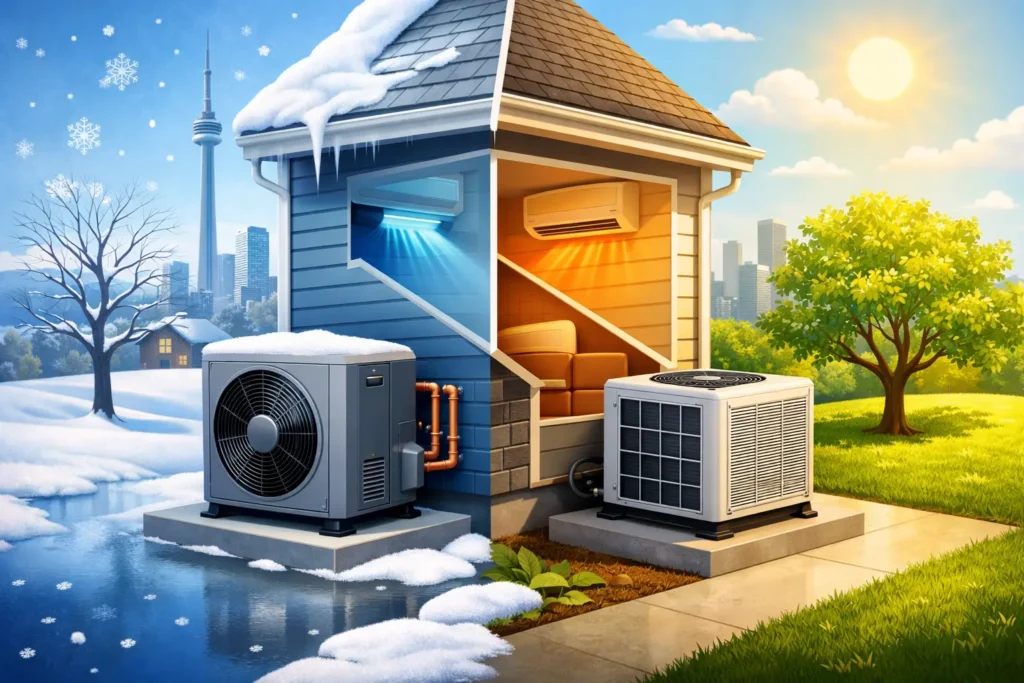
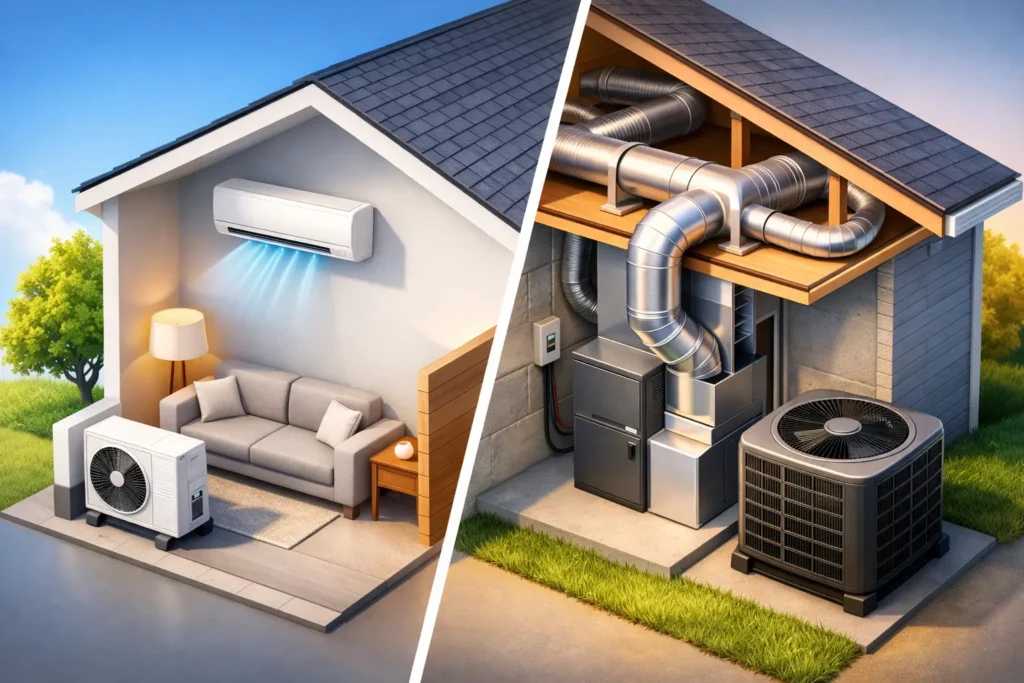
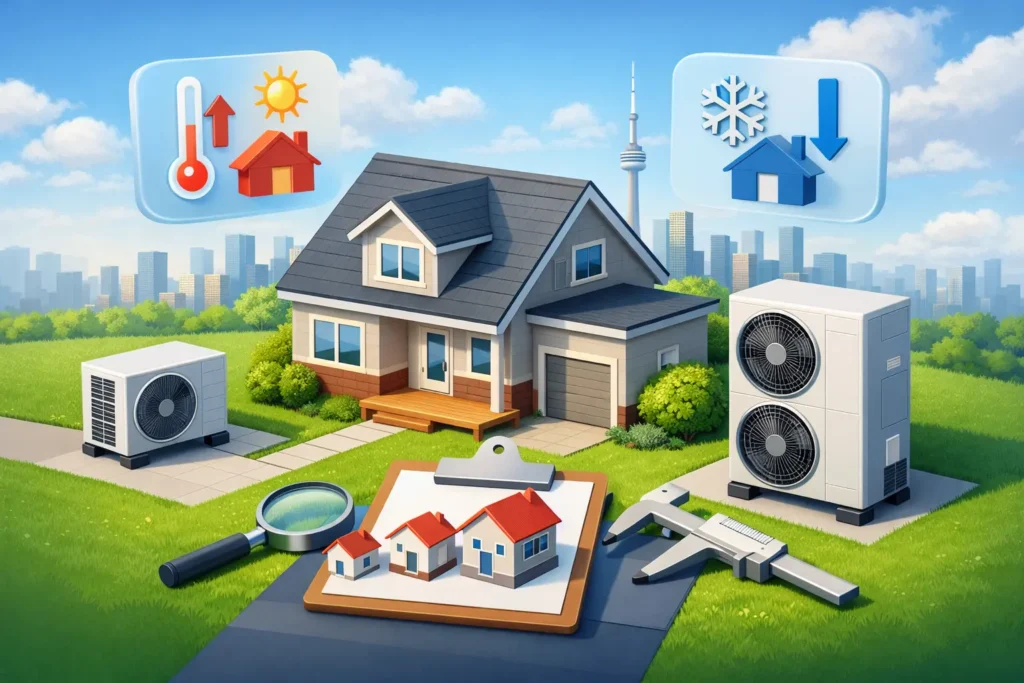
You may also want to compare a central air conditioner with a heat pump. A heat pump provides cooling in summer and can heat your home during milder weather, which may reduce reliance on a gas furnace. It can be an appealing option for homeowners planning a longer-term efficiency upgrade. However, the right choice depends on your current heating equipment, electrical capacity, home comfort goals, and available budget.
Features worth considering
Variable-speed or two-stage equipment can offer steadier temperatures and better humidity control than a basic single-stage system. These benefits can be especially noticeable in homes with uneven temperatures or families who prefer quieter operation. They are not necessary for every house, though, and the added cost should be weighed against the comfort improvement you expect.
A compatible thermostat can also help you manage schedules and monitor your system, but it cannot compensate for incorrectly sized equipment or poor airflow. Focus on the system fundamentals first.
What should be included in an AC replacement quote?
A useful quote should make it easy to understand what you are buying and what work is included. It should identify the equipment model, cooling capacity, efficiency rating, warranty details, and total installation price. If modifications are needed, such as a new pad, electrical work, line-set replacement, drain adjustments, or ductwork changes, those items should be explained clearly.
Be cautious with quotes that focus only on a low equipment price. Replacing an air conditioner involves more than placing a new outdoor unit beside the house. The indoor coil needs to match the outdoor unit. Refrigerant lines must be properly sized, connected, pressure-tested, evacuated, and charged. Condensate drainage, electrical connections, airflow, and thermostat operation all need to be checked before the system is handed over.
In Ontario, electrical and safety requirements may apply to the installation. A professional contractor should handle the work correctly and explain what is needed for your specific home. This protects both system performance and your peace of mind.
Prepare your home for installation day
Before installation, clear a path to the furnace or air handler and make room around the indoor equipment. The installers may need access to the electrical panel, thermostat, outdoor unit location, and drain connections. Keep pets safely away from work areas, and plan for the cooling system to be off while the replacement is underway.
The outdoor unit needs open space around it for airflow and future service. Avoid placing it where shrubs, fencing, or stored items will block the unit. If landscaping has grown tightly around your existing condenser, this is a good time to plan a better service clearance.
After installation, ask the technician to show you how to use the thermostat, where the filter is located, and what maintenance the system needs. You should also receive the model and serial information, warranty details, and a clear explanation of any work completed.
A guide to replacing old air conditioner equipment without surprises
The easiest way to avoid surprises is to ask direct questions before you approve the work. Find out why a particular size and model were recommended, whether your furnace blower and evaporator coil are compatible, and whether any duct or electrical updates are required. Ask what happens if an unexpected issue is found during installation and how labour warranty coverage works.
Do not choose solely by the lowest upfront figure or the highest efficiency label. Look for a recommendation that fits your home, a price that identifies the full scope of work, and an installer willing to explain the trade-offs in plain language. Clear answers early on usually lead to fewer surprises later.
A new air conditioner should bring relief, not another home maintenance concern. If your current system is becoming unreliable, arrange an assessment before the next stretch of hot weather. Easy Breezy HVAC can help GTA homeowners compare practical replacement options, understand the installation work involved, and move forward with confidence.