
A heat pump that is too small can leave your home struggling on a January night. One that is too large can cycle on and off, create uneven temperatures, and cost more than necessary. That is why learning how to pick heat pump size starts with your home’s heat loss, not a quick guess based on square footage.
For homeowners across Toronto and the GTA, proper sizing matters even more because our winters place real demands on heating equipment. A certified technician should assess your home, your existing system, and how you use the space before recommending a capacity.
Heat pump size means heating and cooling capacity
Heat pumps are commonly described by their capacity in BTUs per hour. A 24,000 BTU heat pump is often called a two-ton unit, while a 36,000 BTU model is typically called a three-ton unit. Those numbers describe how much heat the equipment can move, not the physical size of the outdoor unit.
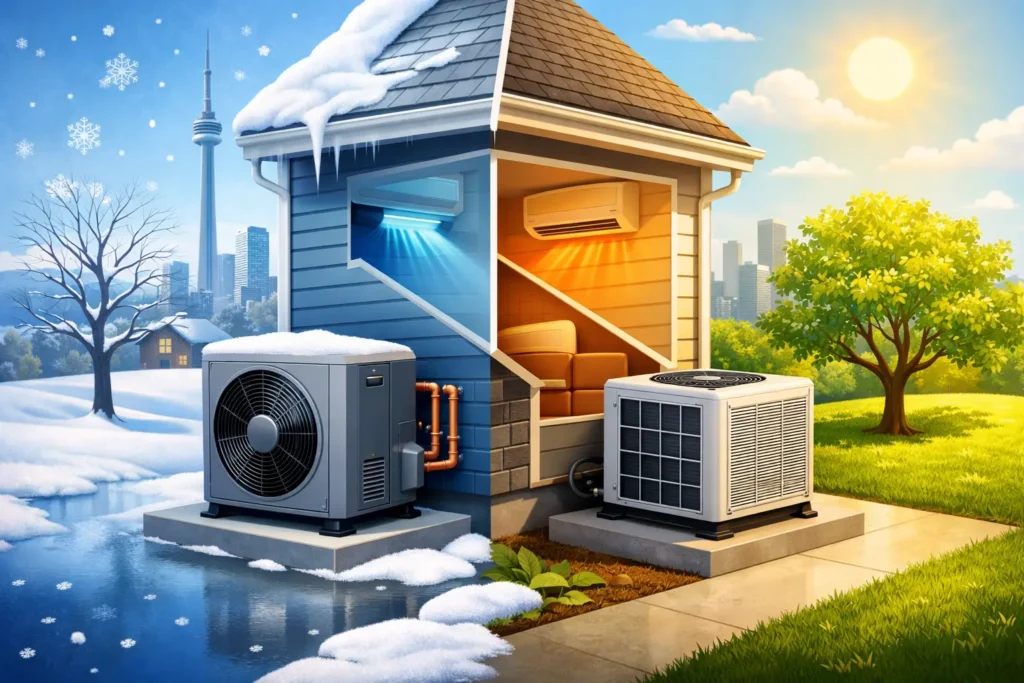
The right capacity must work in two seasons. It needs to provide enough cooling during a humid GTA summer and enough heat as outdoor temperatures drop. Because cold air contains less available heat, a heat pump’s output can change in winter depending on the model and the temperature outside.
This is one reason a heat pump should not be selected solely by matching the size of an old air conditioner or furnace. Older equipment may have been oversized from the beginning, and a new high-efficiency model may perform very differently.
Why square footage is only a starting point
Square footage can provide a rough planning range, but it cannot tell you the correct heat pump size on its own. Two 2,000-square-foot homes in Vaughan can have very different heating needs.
One may be a newer, well-insulated home with modern windows, a finished basement, and minimal air leakage. The other may have older windows, an uninsulated addition, a drafty attic hatch, and large north-facing rooms. Even though the floor area is the same, the second home will lose heat faster.
A quick square-foot estimate also misses factors such as ceiling height, window size, home orientation, insulation levels, exposed walls, ductwork condition, and the number of people living in the home. It is useful for an early conversation, not for making a final equipment decision.
The best way to pick heat pump size: a heat-loss calculation
A professional heat-loss and heat-gain calculation is the most reliable way to size a system. You may hear this called a Manual J calculation or a load calculation. The goal is straightforward: determine how much heating and cooling your home actually needs at expected outdoor design temperatures.
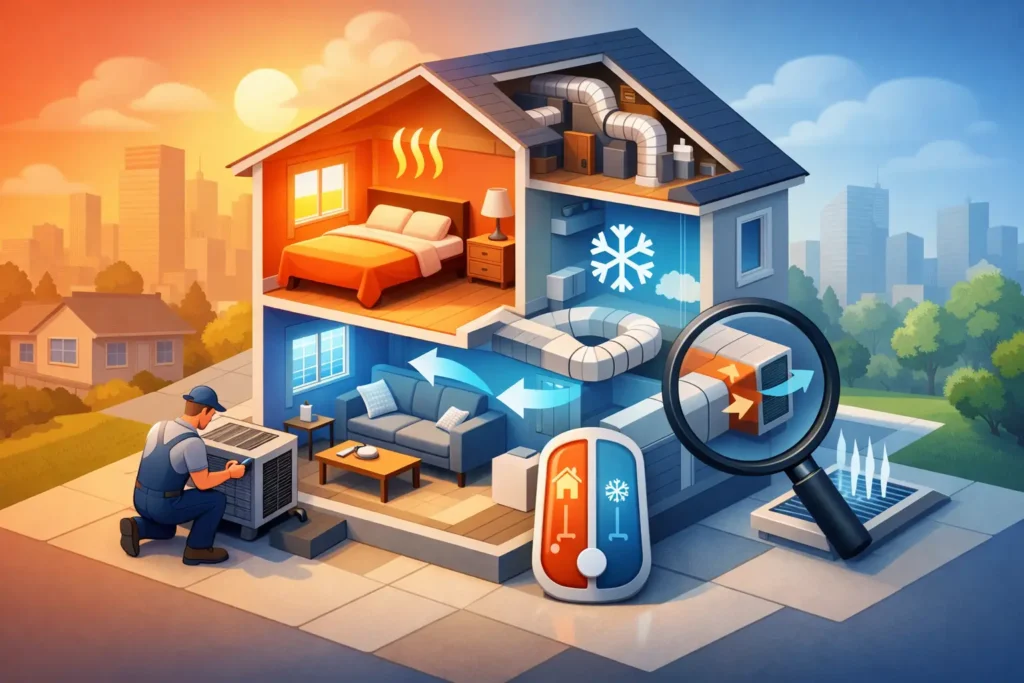
During an assessment, the technician should look at the building rather than just the existing equipment. That includes the home’s dimensions, insulation, windows, air leakage, duct layout, and room-by-room comfort concerns. If a bedroom is always colder than the rest of the house, that detail matters.
For a Toronto-area home, the heating side of the calculation deserves close attention. The selected heat pump should have enough usable capacity at low temperatures, not simply a high capacity rating under mild test conditions. Ask to see the model’s heating output at colder outdoor temperatures so you understand what the system can deliver when you need it most.
Consider whether you want a heat pump-only or hybrid system
The right size also depends on what will support the heat pump in cold weather.
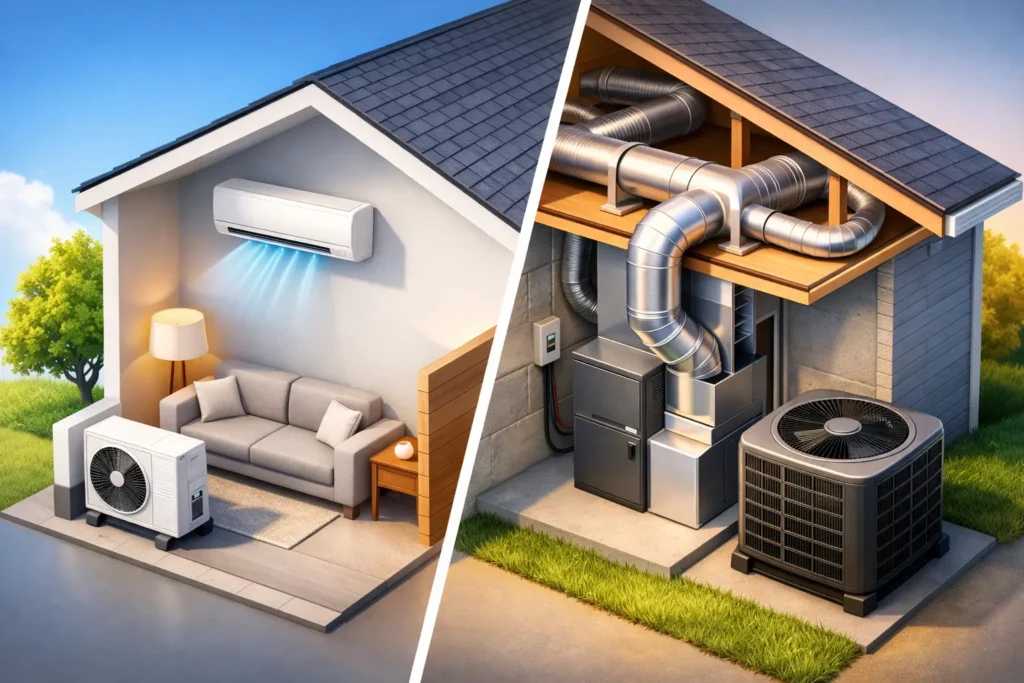
A heat pump-only system relies on the heat pump as the primary heating source, usually with electric backup heat available for extreme conditions or defrost cycles. This approach can work well when the home is suitable, the selected cold-climate model has strong low-temperature performance, and the electrical service can support the equipment.
A hybrid system pairs an electric heat pump with a gas furnace. The heat pump handles much of the heating during milder weather and provides efficient summer cooling. When temperatures fall below a chosen balance point, the furnace can take over. For many GTA homeowners replacing both an aging furnace and air conditioner, this setup offers dependable winter backup without forcing the heat pump to carry every cold-weather load alone.
Neither option is automatically better. A heat pump-only installation may suit a well-insulated home with the right electrical capacity. A dual-fuel setup may make more sense for a house with an existing gas connection, higher heat loss, or a homeowner who wants furnace backup. The recommendation should reflect your home and priorities, not a one-size-fits-all sales pitch.
Watch for oversizing, not just undersizing
Homeowners understandably worry about buying a heat pump that cannot keep up. But oversizing creates its own comfort and efficiency problems.
A conventional oversized system may turn on, satisfy the thermostat quickly, and shut off again before it has properly circulated air through the home. In summer, short cycles can reduce dehumidification, leaving rooms cooler but still clammy. Frequent starts and stops can also add wear to components.
Variable-speed heat pumps are more flexible because they can adjust output over a range rather than operate only at full capacity. They can run longer at lower speeds, which often helps maintain steadier temperatures and quieter operation. However, variable capacity does not make sizing irrelevant. A system still needs to be selected within the right range for the home’s calculated load.
Your ducts and electrical system affect the answer
The outdoor unit is only one part of a heat pump installation. Existing ductwork must be able to deliver the required airflow to each room. Undersized, leaking, or poorly balanced ducts can make a properly sized heat pump feel inadequate.
A technician should inspect the supply and return ducts, especially if you have persistent hot or cold rooms. Sometimes the right solution includes duct modifications, additional returns, or airflow balancing rather than moving up to a larger heat pump.
Electrical capacity is another practical consideration. Heat pumps, electric backup heaters, and heat pump-only conversions may require panel upgrades or new electrical work. This should be identified before installation, with the cost and scope explained clearly. A lower equipment price is not truly transparent if required electrical work appears as a surprise later.
Questions to ask before approving a heat pump size
Before choosing a model, ask the contractor how the capacity was determined and whether a heat-loss calculation was completed. You should also ask about the unit’s heating output at low outdoor temperatures, its cooling capacity, and what backup heat will operate during very cold weather.
It is reasonable to ask whether your existing ducts are suitable, whether your electrical panel can support the system, and if any modifications are recommended. If you are comparing quotes, make sure each proposal identifies the actual equipment model, capacity, included installation work, warranty coverage, and any work that is excluded.
Clear answers protect you from comparing a complete installation against a low initial number that leaves out essential details. At Easy Breezy HVAC, homeowners should be able to understand what is being recommended and why before work begins.
Common heat pump sizing mistakes
The most common mistake is replacing an old unit with the same tonnage without checking whether the original equipment was correctly sized. Another is relying on a square-foot rule that ignores insulation, windows, and air leakage.
It can also be misleading to focus only on a heat pump’s maximum advertised BTU rating. What matters is the unit’s available capacity at the temperatures your home experiences, along with its ability to modulate efficiently during milder weather.
Finally, do not assume a bigger heat pump will solve comfort problems caused by poor airflow, inadequate insulation, or thermostat placement. Equipment capacity is part of the answer, but the house and the installation determine how well that capacity is used.
A properly sized system should feel uneventful
The best heat pump is not the biggest model on the quote. It is the one that matches your home’s real load, works with your ducts and electrical system, and gives you a clear plan for cold-weather comfort. A careful assessment before installation is time well spent, because year-round comfort should not depend on guesswork.