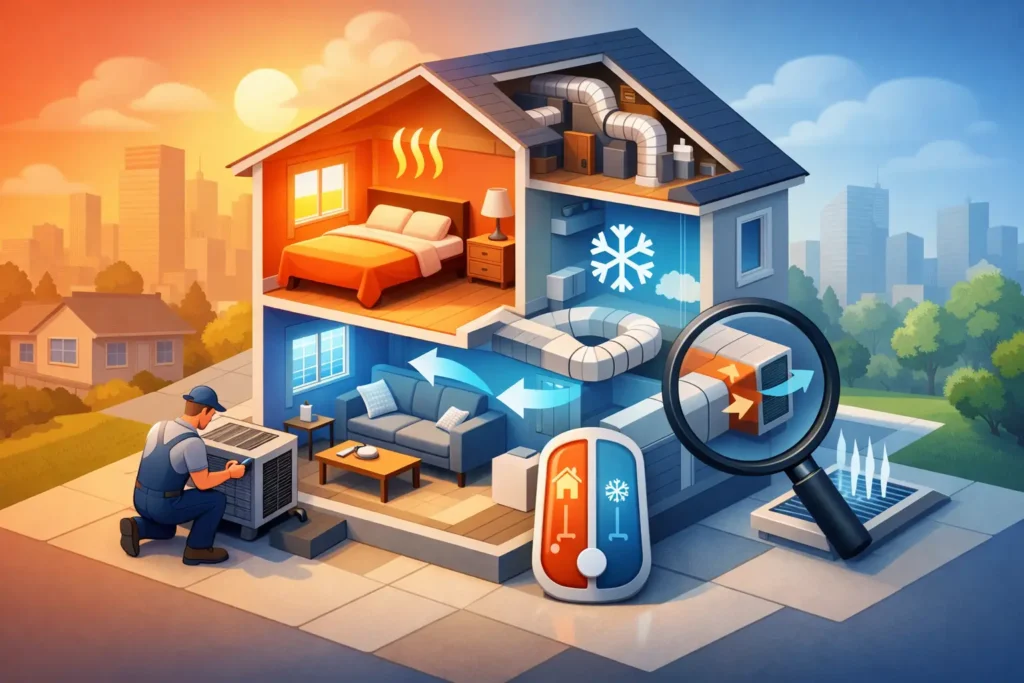
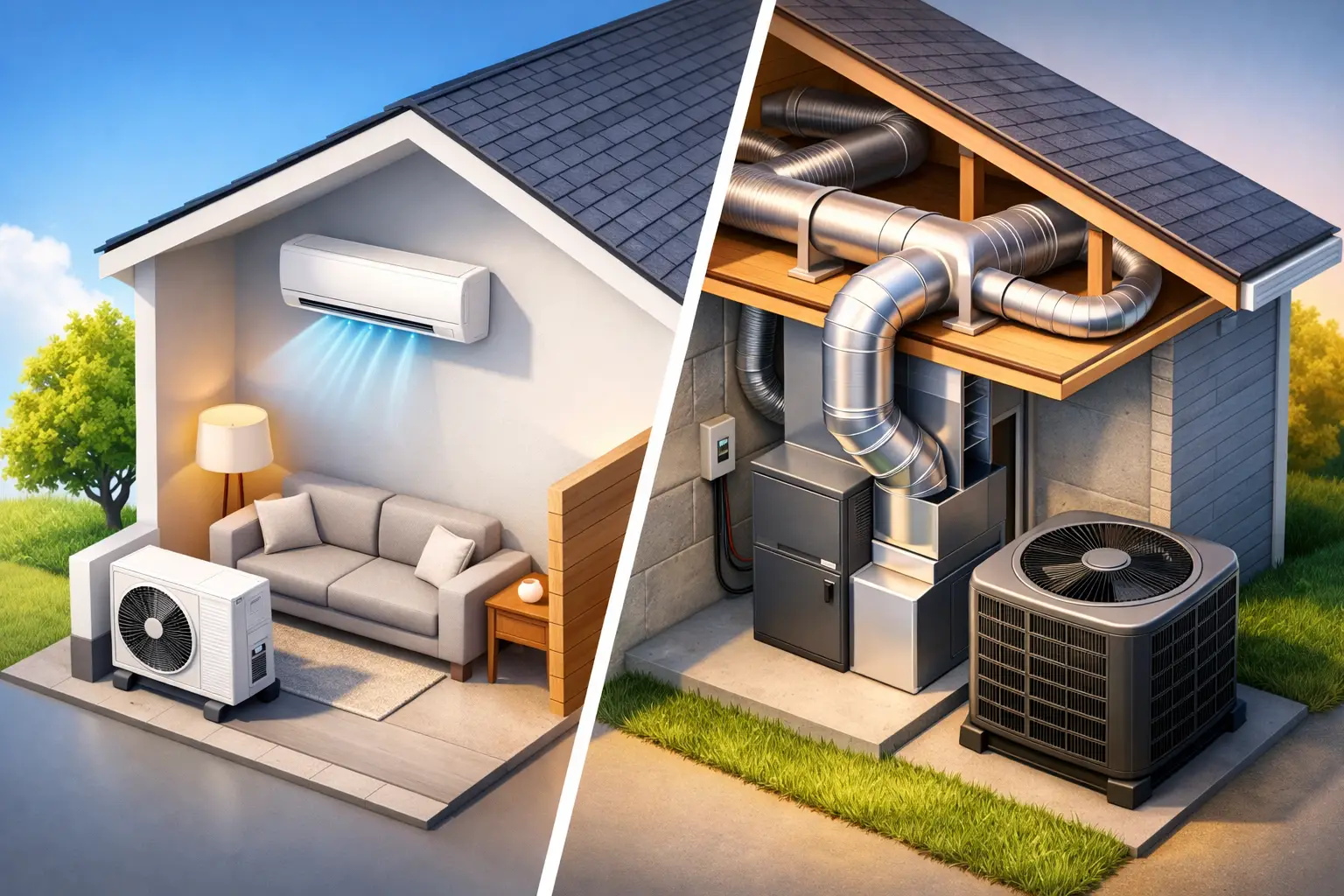
A second-floor bedroom that stays hot while the main floor feels fine is not always a sign that you need a bigger air conditioner. For many GTA homeowners, the real decision is ductless versus central air conditioning: whether to improve a problem area with targeted cooling or install one whole-home system through ducts.
Both can deliver reliable summer comfort. The right choice depends on your home’s existing layout, ductwork, budget, rooms you use most, and whether you also want efficient heating in spring and fall. A clear assessment before installation matters more than choosing the system that happens to be popular.
Ductless versus central air conditioning: the basic difference
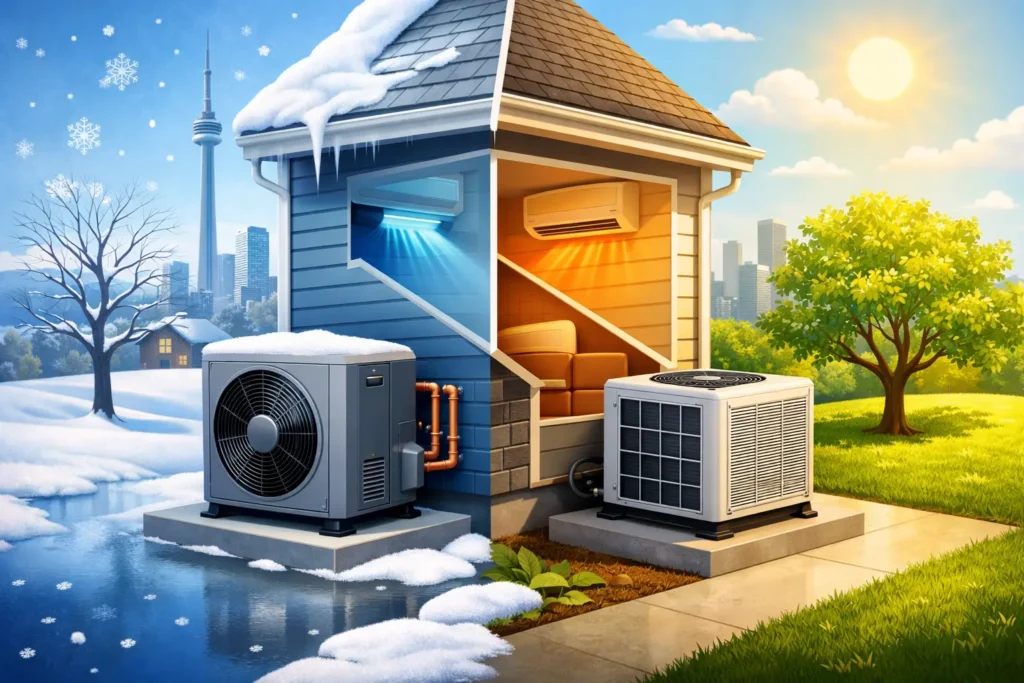
Central air conditioning uses an outdoor condenser connected to an indoor coil, usually installed above or beside a forced-air furnace. The furnace blower moves cooled air through supply ducts and returns it through return-air ducts. One properly sized central system can cool the entire home.
Ductless air conditioning, often called a mini-split, uses an outdoor unit connected to one or more indoor wall-mounted, floor-mounted, or ceiling-mounted heads. Each indoor head cools its assigned zone. The equipment does not rely on a home’s ductwork, although some ductless systems can serve multiple rooms from one outdoor unit.
Many ductless models are heat pumps. That means they can provide cooling in summer and heating during milder weather, making them useful in additions, converted garages, finished basements, and rooms that are uncomfortable at either end of the temperature range.
When central air is usually the better fit
If your home already has a gas furnace and well-designed ductwork, central air is often the most practical way to cool every room. The ducts, blower, thermostat wiring, and indoor equipment location are already in place, which can keep the installation straightforward compared with building a new distribution system.
Central air also keeps the equipment mostly out of sight. There are no wall heads in bedrooms or living areas, and one central thermostat provides a familiar way to manage cooling. For homeowners replacing an older central AC unit, staying with central air may be the simplest path, provided the existing ductwork and furnace blower are in good condition.
A central system can improve more than temperature when it is correctly selected and commissioned. Balanced airflow, adequate return-air paths, and appropriate cooling capacity help manage humidity during Toronto’s muggy summer stretches. A unit that is too large may cool the house quickly but shut off before it removes enough moisture. A unit that is too small may run continuously and still struggle on the hottest days.
Central air is not automatically the answer for every house with ducts. Older homes can have undersized or leaky ductwork, limited return ducts upstairs, or rooms added long after the original system was installed. Replacing the outdoor unit without checking these details can leave the same comfort issues in place.
Central air works best when the home needs whole-home cooling
A family using bedrooms, living spaces, and a home office throughout the day generally benefits from even, whole-home comfort. Central air is also a strong choice when a furnace replacement and AC installation are being planned together. Matching the indoor and outdoor components and confirming proper airflow helps protect efficiency, comfort, and equipment life.
When ductless air conditioning makes more sense
Ductless systems are particularly effective when cooling is needed in a specific area and extending ductwork would be disruptive or expensive. A top-floor bedroom, attic conversion, sunroom, home office, or new addition may be ideal for a single-zone ductless unit.
Because each indoor head has its own controls, ductless cooling gives households more room-by-room flexibility. You can cool the primary bedroom overnight without cooling an unused guest room, for example. This zoning can reduce wasted energy when only part of the house needs conditioning.
Installation is often less invasive than adding ducts. The indoor and outdoor units are connected through a small wall opening for refrigerant lines, wiring, and condensate drainage. That said, “less invasive” does not mean “no planning required.” The outdoor unit still needs a suitable location, the indoor head must be positioned for effective air distribution, and drainage must be installed correctly to prevent water issues.
Ductless is also a useful solution for homes with radiator heating or electric baseboards that have no duct system at all. Installing central air in these homes can require major construction. A ductless heat pump can add air conditioning and provide supplemental heat without opening walls throughout the property.
Ductless is not always a whole-home replacement
A multi-zone ductless system can cool several rooms, but it is not automatically cheaper or better than central air for an entire detached home. Multiple indoor heads, longer line runs, electrical requirements, and the complexity of installation can add to the cost. Indoor heads are visible, and each area must be planned carefully so air reaches where people actually spend time.
For a home with many closed bedrooms and several levels, a ductless design may require more heads than expected. In that case, a central system or a combination of central air and one ductless unit for a difficult room may be the more sensible approach.
Compare comfort, efficiency, and operating costs
Both systems can be efficient when they are the right size and installed properly. Looking only at the equipment’s published efficiency rating can be misleading. Installation quality, home insulation, duct condition, thermostat settings, window exposure, and how the system is used all affect real operating costs.
Ductless systems can be very efficient because they avoid losses from leaky or unconditioned ductwork and allow zone-by-zone operation. They are especially appealing when one or two rooms need regular cooling. However, keeping several indoor heads running across a large home can reduce the savings that make ductless attractive in a smaller application.
Central air can be economical for a home that needs cooling everywhere, particularly when existing ducts are properly sealed and balanced. It also works with standard filtration at the furnace, which may be a consideration for households focused on dust and seasonal allergens. Ductless heads have washable filters that need regular cleaning, but they do not use the same central filter setup.
Noise is another practical difference. Both types are generally quiet when installed correctly. Ductless indoor heads produce a soft fan sound in the room. Central systems are quiet in living areas, but some homeowners notice airflow noise at registers or the sound of the furnace blower. Equipment placement and duct design matter here.
Installation details that should guide the decision
A reliable recommendation starts with the house, not a quick estimate based only on square footage. Cooling load depends on insulation, windows, ceiling height, shade, air leakage, occupancy, and room orientation. A west-facing top-floor room can need a different solution than a shaded main-floor room of the same size.
For central air, the installer should evaluate the furnace, blower capacity, electrical connection, refrigerant line condition, drain arrangement, and ductwork. If the existing furnace is near the end of its life, replacing it at the same time can avoid paying twice for related work later.
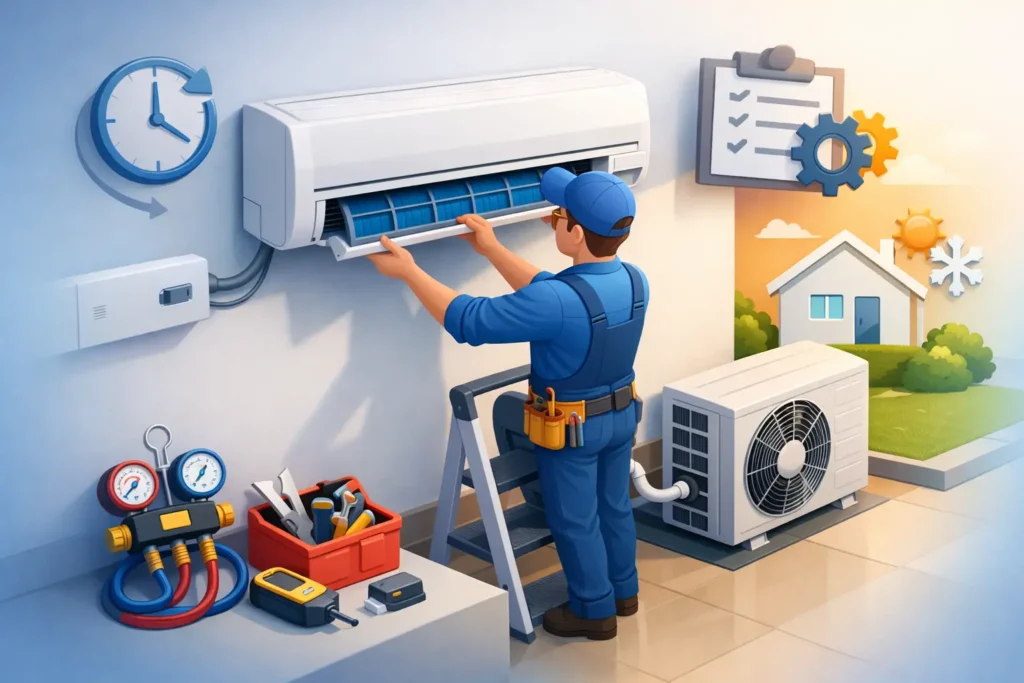
For ductless, the installer should confirm the number and location of indoor units, line-set routing, exterior unit placement, condensate drainage, electrical requirements, and access for future service. A poorly located head may blast one corner of a room while leaving another area warm. A good plan prioritizes comfort, appearance, and serviceability.
In Toronto and the GTA, municipal requirements and condo rules can also affect exterior equipment placement. If you live in a condominium, get approval requirements clarified before selecting a system. For detached and semi-detached homes, property access and clearance around the outdoor unit should still be reviewed before installation day.
A practical way to choose
Choose central air when you have usable forced-air ducts and want consistent cooling throughout the home. It is usually the more natural fit for whole-home replacement, particularly for families who want one system serving all occupied areas.
Choose ductless when you need focused comfort, have no ducts, are renovating a hard-to-condition space, or want independent temperature control in a few rooms. It can also work well alongside central air when one room consistently runs hotter or colder than the rest of the house.
If your current system leaves some rooms uncomfortable, do not assume the answer is a larger unit. The issue may be airflow, insulation, return-air capacity, duct leakage, or thermostat location. A certified technician can identify the cause and explain the options before recommending equipment. Easy Breezy HVAC helps GTA homeowners compare practical solutions with clear installation details, so the choice reflects the home rather than a one-size-fits-all sales pitch.
The best cooling system is the one that fits how your household actually lives: the rooms you use, the temperatures you prefer, and the upgrades your home can support. Start with those facts, and the right direction becomes much easier to see.