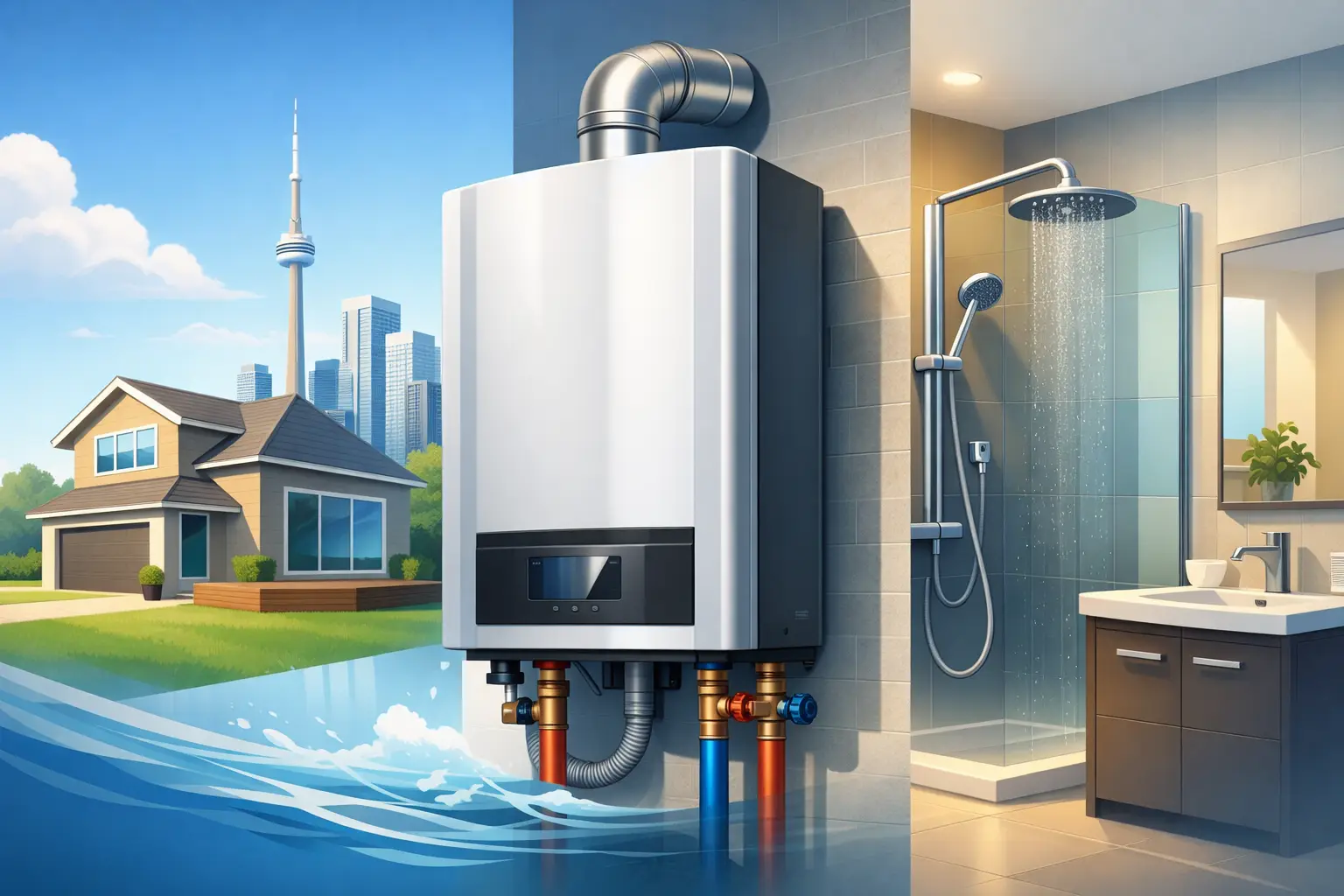
A tankless water heater can feel like a major upgrade when the old tank is leaking, running out of hot water, or taking up valuable basement space. But a useful tankless water heater review is not just about whether a unit can heat water on demand. For Toronto and GTA homes, the real question is whether it can deliver enough hot water during a cold January morning, fit the home’s gas and venting setup, and make financial sense after installation.
Tankless systems are an excellent fit for many households, particularly families that want a longer supply of hot water for back-to-back showers. They are not automatically the right answer for every home. The best choice comes down to household demand, fuel availability, existing infrastructure, and the condition of the current water heater.
Tankless Water Heater Review: What Homeowners Should Judge
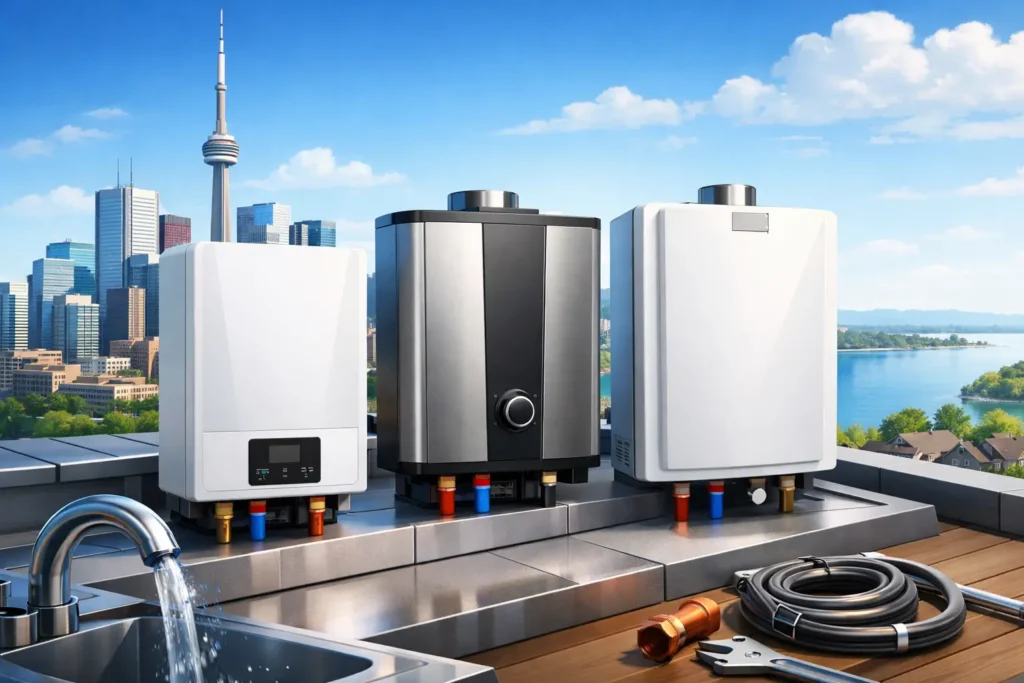
A tankless water heater heats water only when a fixture calls for it. Rather than storing 150 to 190 litres of hot water in a tank, it senses flow and uses a heat exchanger to raise the water temperature as it passes through the unit.
That design eliminates standby heat loss from a stored tank of water. It also means the system does not have a fixed tank capacity to empty. If the unit is correctly sized, it can continue producing hot water while water is flowing.
The key phrase is correctly sized. A tankless unit is rated by how much water it can heat at a given temperature rise. In the GTA, incoming groundwater is particularly cold in winter. A model that appears powerful on paper may produce less flow when it has to heat very cold water up to a comfortable shower temperature.
For that reason, homeowners should look beyond a broad claim of “endless hot water.” A better review considers the number of bathrooms, shower fixtures, appliances that use hot water, and whether several people typically use water at the same time.
Where Tankless Water Heaters Perform Well
The strongest advantage is sustained hot water for households with recurring demand. A properly selected gas tankless unit can support consecutive showers without the recovery wait associated with a conventional tank. This is useful for larger families, homes with two or more bathrooms, and households with busy morning schedules.
Space is another practical benefit. Tankless units are wall-mounted and considerably smaller than a storage tank. That can free up room in a utility area, laundry room, or basement. For homeowners finishing a basement or reorganizing mechanical space, that extra room can matter.
Modern condensing gas models can also be highly efficient. They capture more heat from combustion than older non-condensing equipment, which may reduce gas consumption compared with an aging standard-efficiency tank. Savings vary, however, based on hot-water use, the efficiency of the equipment being replaced, gas rates, and installation requirements.
A tankless system may also offer a longer equipment life than a basic tank water heater when it is installed properly and maintained as recommended. That does not mean it is maintenance-free. The heat exchanger still needs attention, especially in areas where mineral buildup can affect performance.
The Trade-Offs Worth Knowing Before You Buy
Tankless equipment typically costs more to purchase and install than a conventional tank. The unit itself is only part of the cost. A home may need changes to gas piping, venting, electrical supply, condensate drainage, or water connections before installation can be completed safely and to code.
Gas capacity is often the deciding factor. A high-output tankless water heater can require more gas than the existing line can provide. If the gas line is undersized, it may need to be upgraded. This is not an optional detail or an unnecessary add-on. Proper gas sizing protects performance and helps ensure the appliance operates safely.
Venting is equally important. Some homes can use existing pathways, while others require new direct venting through a side wall or roof. Condensing models generally use different vent materials than older atmospheric water heaters. The location of the unit, clearances, drainage, and outdoor termination all need to be assessed before a final installation plan is confirmed.
There is also a small learning curve in day-to-day use. Tankless systems can have a minimum flow rate, meaning a very small trickle of water may not activate the burner. Some homes also experience a brief delay before hot water reaches a tap, especially when bathrooms are far from the unit. A recirculation feature or dedicated recirculation line can reduce that wait, but it adds cost and may use additional energy.
Sizing a Tankless Unit for a GTA Household
Sizing should begin with simultaneous demand, not the number of people listed on a household form. A family of four that showers at different times may need less capacity than a household of three where two showers, a dishwasher, and a washing machine often run together.
A technician should estimate the maximum expected flow rate and account for winter water temperatures. For example, two showers running at once can require a meaningful amount of flow before any kitchen or laundry use is added. Showerheads vary, and newer low-flow fixtures can reduce demand, so assumptions should be based on the actual home where possible.
The following questions help narrow down the right capacity:
- How many bathrooms may be used at the same time?
- Are there large soaker tubs, rainfall showers, or body-spray systems?
- Does the home have natural gas available and sufficient gas-line capacity?
- Is hot water needed in a basement suite, addition, or distant bathroom?
An oversized unit is not always a problem, but it can increase upfront cost without delivering a meaningful benefit. An undersized unit is more frustrating because it can lead to reduced flow or inconsistent temperatures during peak use. Honest sizing is more valuable than selecting the largest model available.
Condensing vs. Non-Condensing Models
For many GTA installations, a condensing tankless water heater is the practical choice. These models are designed to capture additional heat from exhaust gases, improving efficiency. They commonly use PVC or similar approved venting materials, which can make certain installations more flexible than older venting methods.
Non-condensing units can still make sense in specific replacement situations, particularly where compatible venting is already in place. Their installation requirements are different, and the right choice depends on the home, the appliance location, and the overall project cost.
This is one area where comparing equipment price alone can be misleading. A lower-priced unit may require more expensive venting work. Conversely, a higher-efficiency condensing model may be easier to install in a particular home. The best comparison includes the complete installed price, not just the box on the wall.
Installation Quality Matters as Much as the Model
A tankless water heater is a high-output gas appliance, so installation quality directly affects safety, reliability, and manufacturer warranty compliance. The work should include correctly sized gas piping, approved venting, appropriate water isolation valves, pressure relief protection, condensate management where required, and a clear explanation of how to operate the unit.
Certified technicians should also test the appliance under load. It is not enough for a new heater to simply turn on. Proper commissioning checks ignition, temperature settings, venting operation, gas supply, error codes, and hot-water delivery at fixtures.
Easy Breezy HVAC Inc. approaches tankless installations with that full-home perspective. Before recommending a unit, the important details are the home’s demand, existing gas and venting conditions, available installation location, and the homeowner’s budget. Clear installed pricing and an explanation of required upgrades help prevent surprises after the work begins.
Maintenance and Expected Ownership Costs
Tankless systems need periodic maintenance to keep the heat exchanger operating efficiently. Flushing removes mineral scale that can build up inside the unit. The schedule depends on local water conditions, household use, and manufacturer guidance, but annual service is a sensible approach for many homes.
Maintenance is also an opportunity to inspect venting, clean filters where applicable, verify safe operation, and catch small issues before they become a no-hot-water call. Homeowners should factor this service into the long-term cost of ownership rather than treating a tankless heater as a fit-and-forget appliance.
If your current tank water heater is working well and your household has modest, predictable hot-water use, replacing it with another tank may remain the most economical decision. If you are facing a replacement anyway, want more usable space, or regularly run out of hot water, tankless equipment deserves serious consideration.
The right tankless water heater should fit your home rather than force your home to fit the equipment. A careful assessment now can provide dependable hot water through the next GTA winter and many ordinary mornings after that.