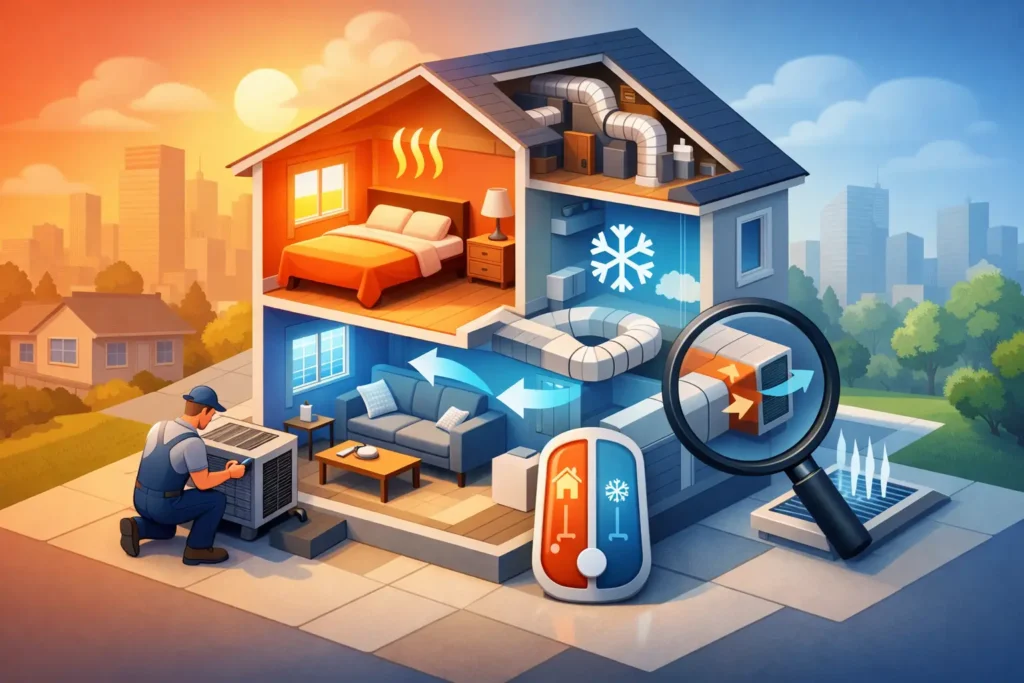
A broken air conditioner in July makes the decision feel simple: replace it quickly and get cool air back. But when comparing a heat pump versus air conditioner, GTA homeowners have a bigger choice to make. One system handles cooling only. The other can cool your home in summer and provide electric heat through much of the winter.
The right option depends on your existing heating equipment, your home’s electrical capacity, insulation, comfort priorities, and budget. A heat pump is not automatically the best answer for every property, and a conventional air conditioner is not an outdated choice. Here is how to compare them clearly before replacing your system.
Heat Pump Versus Air Conditioner: The Main Difference
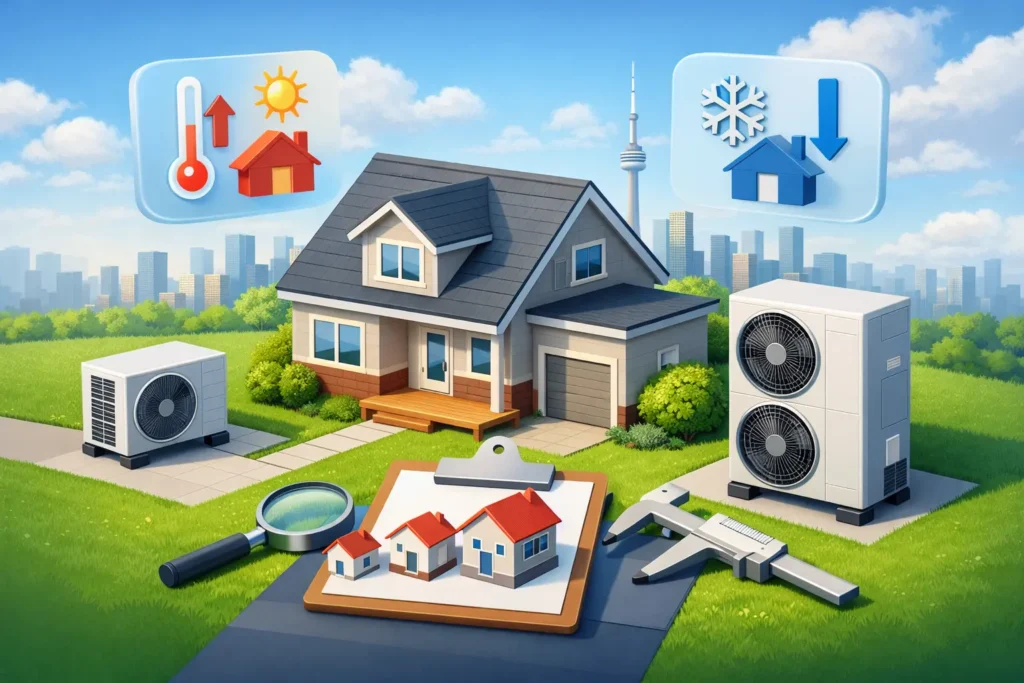
Both central air conditioners and heat pumps use refrigerant, an indoor coil, an outdoor unit, and your ductwork to remove heat from the house in summer. In cooling mode, they work in very similar ways. Both can lower indoor temperatures, reduce humidity, and distribute conditioned air through existing vents.
The key difference is what happens when the weather turns cold. An air conditioner can only cool. Your furnace, boiler, or other heating system takes over in winter.
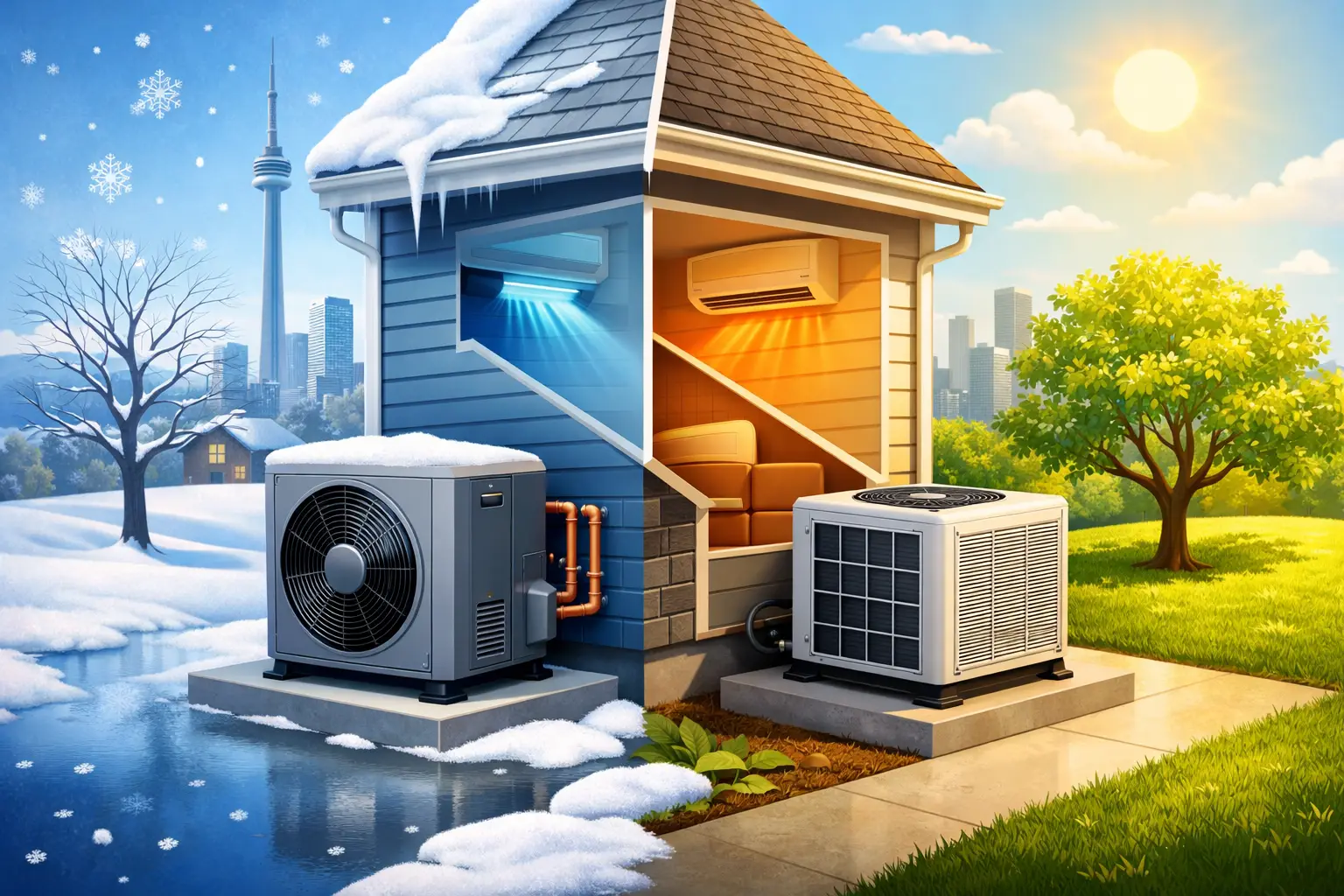
A heat pump reverses its refrigeration cycle. Instead of moving heat out of your house, it draws available heat from outdoor air and brings it indoors. Even cold winter air contains heat energy. Modern cold-climate heat pumps can operate in low temperatures, although their output and efficiency decline as temperatures drop.
For many GTA homes, this makes a heat pump a year-round comfort system rather than a summer-only purchase.
How Each System Performs in Toronto Weather
Toronto summers bring heat and humidity, while winter temperatures can fall well below freezing. That seasonal range is why system selection needs more than a quick comparison of equipment prices.
Summer cooling and humidity control
A properly sized heat pump and a properly sized central air conditioner should both provide reliable summer cooling. Efficiency ratings, installation quality, duct design, thermostat settings, and airflow matter more than the label on the outdoor unit alone.
In practical terms, a heat pump does not usually sacrifice cooling performance simply because it also heats. If replacing an older AC, homeowners can expect a new high-efficiency heat pump to provide strong cooling and dehumidification when it is correctly matched to the indoor equipment.
Oversizing is a common problem with either option. A unit that is too large may cool the house quickly but shut off before removing enough moisture. The result can be a home that feels cool but clammy. Proper load calculations are more dependable than choosing a larger unit just for extra capacity.
Winter heating performance
This is where heat pumps require a closer look. A cold-climate model can provide useful, efficient heat through a large part of a GTA winter. At milder temperatures, it can cost less to operate than electric resistance heat because it moves heat rather than creating it directly.
However, a heat pump is not always intended to work alone during every cold snap. In homes with an existing gas furnace, a dual-fuel setup is often a practical option. The heat pump provides heating during moderate weather, then the furnace takes over when outdoor temperatures fall to a point where gas heat is the better comfort or operating-cost choice.
A conventional air conditioner avoids this decision because it does not heat at all. If your gas furnace is relatively new, reliable, and appropriately sized, replacing only the air conditioner may be the simplest and most economical route.
Upfront Cost and Long-Term Operating Costs
The installed cost of a heat pump is generally higher than that of a comparable air conditioner. A heat pump requires more components and controls to deliver both heating and cooling. Your final price can also be affected by the required electrical work, equipment capacity, duct modifications, line-set condition, and whether an existing furnace will remain in place.
An air conditioner can be the lower upfront-cost choice, particularly when the existing furnace is in good condition. It is a straightforward replacement for homeowners who want dependable summer cooling without changing their heating strategy.
Operating cost is more complicated. A heat pump may reduce the amount of natural gas your home uses, but electricity rates, outdoor temperatures, your home’s heat loss, and the backup heat source all affect the result. There is no honest one-size-fits-all promise that a heat pump will lower every household’s total utility bill.
A good comparison should look at the whole system, not just the outdoor unit. If your furnace is near the end of its life, combining a new heat pump with a compatible furnace may make better long-term sense than replacing the air conditioner now and facing a second major decision shortly afterward.
When an Air Conditioner Is the Better Choice
A central air conditioner remains a strong choice for many homes across Toronto and the GTA. It is especially sensible when your primary goal is reliable cooling and your heating system still has years of useful life.
An AC may be the better fit if you have a newer, efficient gas furnace that you are happy with; you prefer the lowest upfront equipment cost; your electrical panel has limited available capacity; or you do not want to change how your home is heated.
It can also be the more straightforward option for homes where a heat pump would require significant upgrades to electrical service, ductwork, or controls. Those upgrades may still be worthwhile in some cases, but they should be identified before you commit to equipment, not discovered on installation day.
When a Heat Pump Makes More Sense
A heat pump is worth serious consideration if you are replacing both an aging furnace and air conditioner, want to reduce reliance on gas heating, or are looking for one system that supports cooling and heating. It can also be a good fit for homeowners planning broader energy-efficiency improvements, such as air sealing, insulation, or window upgrades.
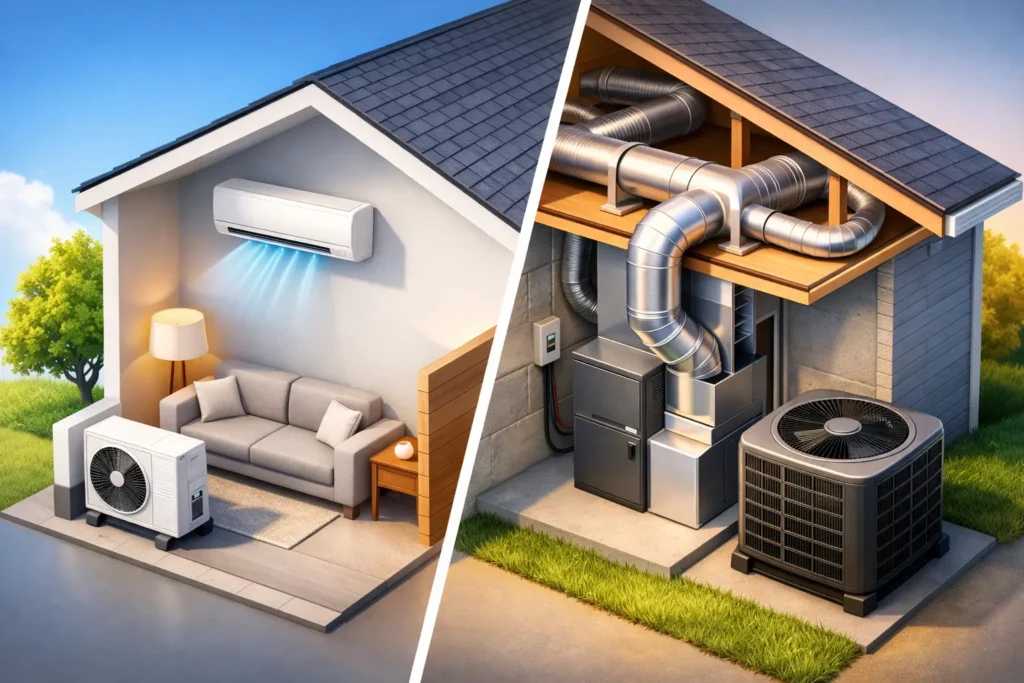
For homes with central ductwork, a ducted heat pump can use the existing distribution system when the ducts are in good condition and properly sized. For additions, converted garages, or rooms that never seem comfortable, ductless heat pump options may also be worth assessing separately.
The important point is that heat pump performance depends heavily on design. A certified technician should confirm the heating load, cooling load, duct airflow, electrical requirements, equipment compatibility, and backup heating plan. Choosing based only on a high efficiency rating or a promotional price can lead to uneven temperatures and disappointing winter performance.
Do You Need a Furnace With a Heat Pump?
Not always. Some homes use an all-electric heat pump system with electric backup heat. Others keep a gas furnace and create a dual-fuel system. The best setup depends on the home’s heat loss and the homeowner’s priorities.
Keeping a furnace can offer reassurance during extreme cold and may avoid the need for major electrical upgrades. It also provides fast, high-capacity heating when needed. On the other hand, an all-electric system can be appropriate for a well-insulated home with sufficient electrical service and a carefully selected cold-climate heat pump.
This is one reason an in-home assessment matters. The right answer for a newer, tightly built Markham home may be different from the right answer for an older detached house in Toronto with original ductwork and higher heat loss.
Installation Quality Matters as Much as Equipment
Whether you choose a heat pump or air conditioner, the installation affects comfort, efficiency, reliability, and equipment lifespan. Correct refrigerant charging, secure electrical connections, proper drainage, airflow testing, and a matched indoor coil are not optional details.
Ask for a clear explanation of what is included in the installation price. It should be clear whether permits, electrical upgrades, thermostat replacement, drain work, pad replacement, coil changes, and removal of old equipment are included or could add to the project cost. Transparent details make it easier to compare options fairly.
Easy Breezy HVAC helps homeowners review practical equipment choices and understand the work required before installation. The goal is not to push every home toward the same technology. It is to install a system that matches the home, the budget, and the way the family wants to manage comfort.
Before choosing, start with the equipment you already have and the problem you are trying to solve. If your furnace is dependable and you need cooling, an air conditioner may be the sensible move. If you are replacing aging heating and cooling equipment together, a properly designed heat pump system could give your home more flexibility for years ahead.