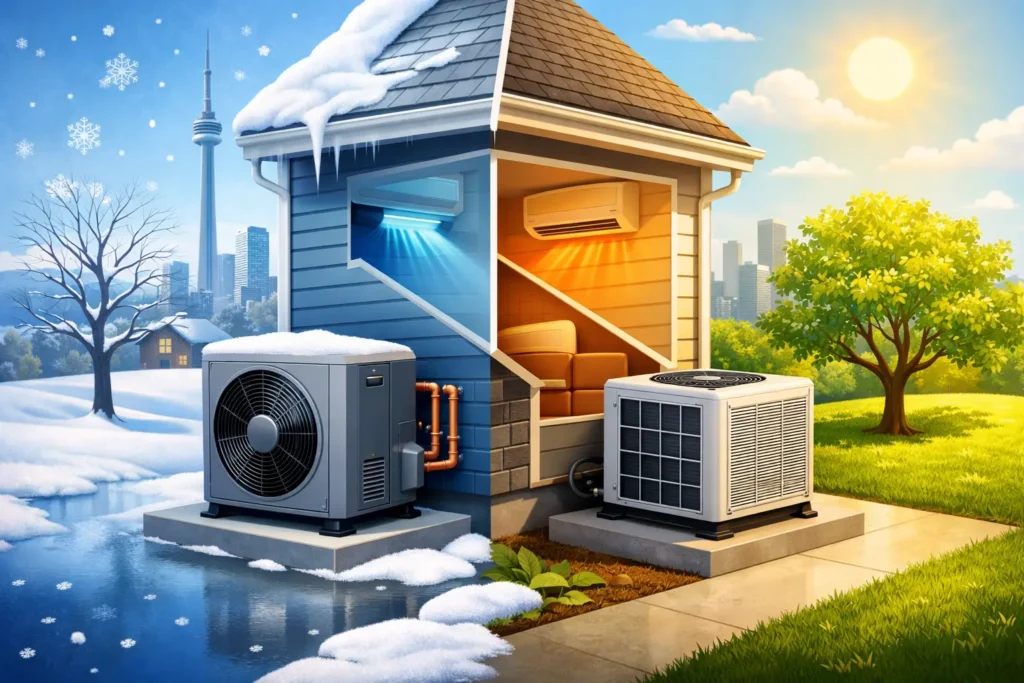
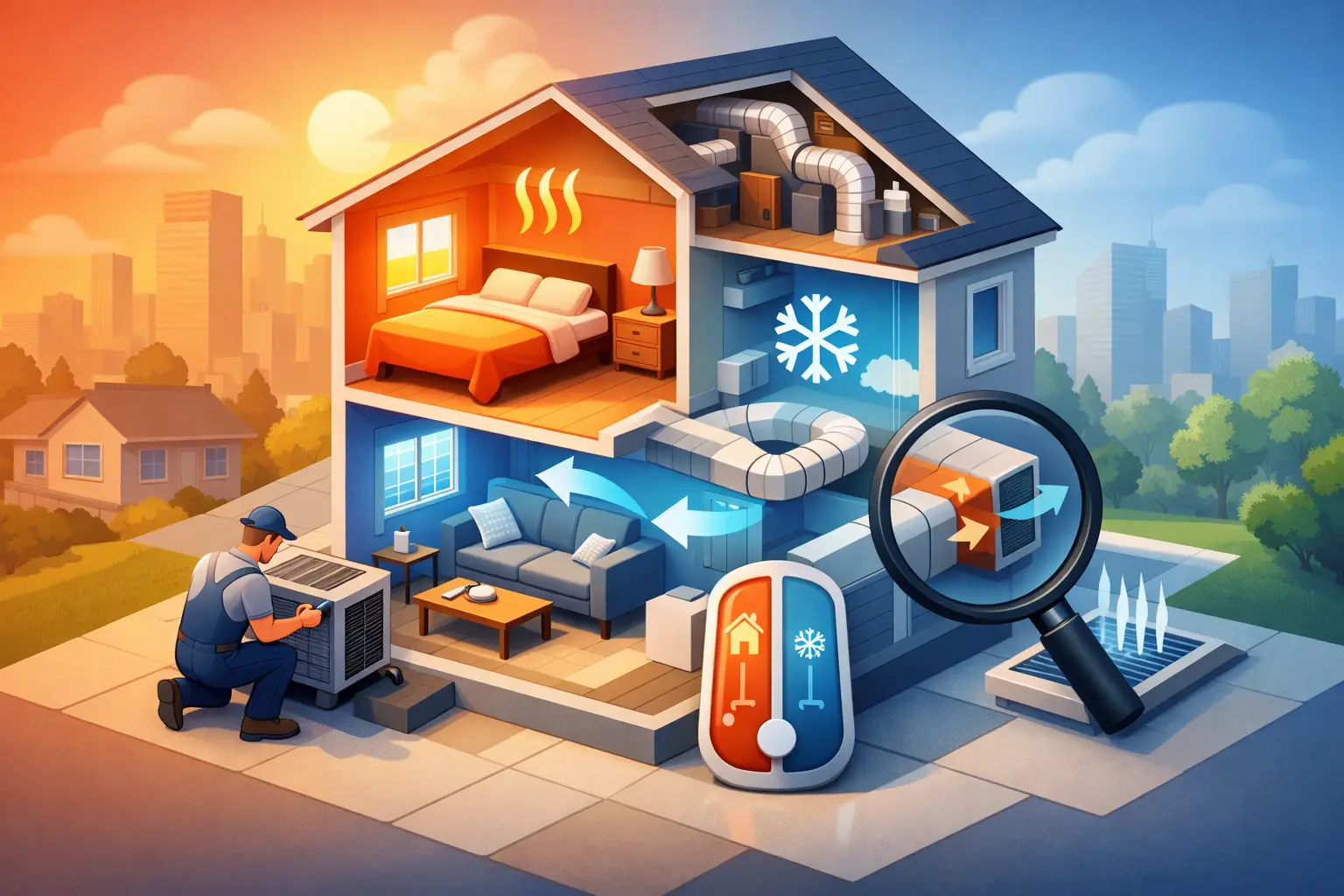
A main floor that feels comfortable while an upstairs bedroom stays stuffy is one of the most common summer comfort complaints in GTA homes. Knowing how to troubleshoot uneven home cooling can help you separate a simple airflow issue from a problem that needs a certified HVAC technician – before you spend another hot night moving fans from room to room.
Uneven cooling is rarely caused by one thing alone. Your air conditioner may be running properly, but a blocked return vent, a neglected filter, leaky ductwork, poor attic insulation, or an undersized system can keep certain rooms warmer than the rest of the house. Start with the checks that are safe and easy to handle, then bring in a professional when the problem points to the equipment or duct system.
Start With the Thermostat and Airflow Basics
Before assuming your air conditioner is failing, make sure it is being asked to cool the home properly. Set the thermostat to cooling mode and choose a temperature several degrees below the current indoor temperature. If your thermostat has a fan setting, use “Auto” rather than “On” for normal operation. The “On” setting runs the blower continuously, which can make some areas feel drafty while circulating warmer air after the cooling cycle ends.
Take note of when the uneven temperatures happen. If the upstairs is warmer only in the late afternoon, sun exposure and attic heat may be major factors. If one room is warm all day and night, the issue is more likely related to airflow, ductwork, insulation, or the size and placement of supply vents.
Walk through the home while the AC is running. Hold your hand near each supply register – the vent that blows air into the room. You should feel a consistent flow of cool air. Then check return vents, which pull indoor air back to the system to be cooled again. Furniture, curtains, storage bins, and rugs should not block either type of vent.
Check the Air Filter First
A dirty furnace or air-handler filter is a frequent cause of weak airflow. When the filter is clogged with dust, pet hair, or renovation debris, the blower has to work harder to move air through the system. Rooms farthest from the equipment often feel the impact first.
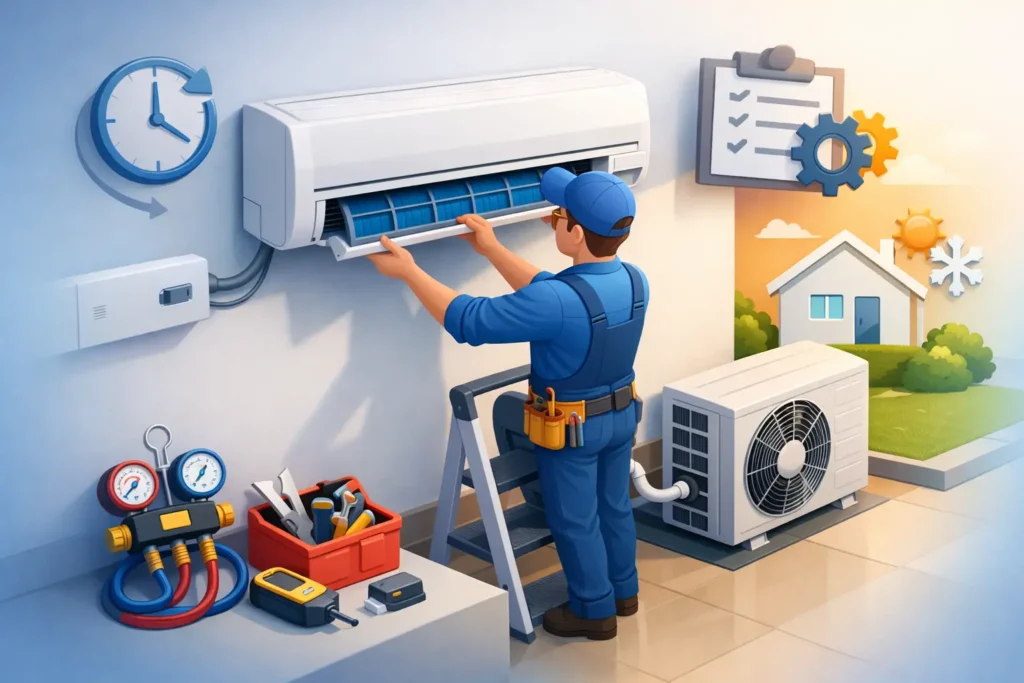
Check the filter monthly during periods of heavy cooling use. Replace it if it looks grey, visibly dirty, or packed with debris. Most homes benefit from changing a standard filter every one to three months, although homes with pets, allergies, or ongoing construction may need more frequent changes.
Choose a filter that your system can handle. Very high-efficiency filters can capture smaller particles, but they can also restrict airflow if the furnace was not designed for them. If you are unsure which filter rating is appropriate, use the filter specification on your equipment or ask a technician during maintenance.
Do Not Close Too Many Vents
It may seem logical to close vents in unused rooms and force more cool air into the rooms you use most. In practice, fully closing multiple supply vents can increase pressure in the duct system and reduce overall performance. It can also create coil-freezing or blower issues in some systems.
Leave most supply vents open. If one room receives noticeably more air than needed, make only a small adjustment to its register and reassess after a full cooling cycle. A properly balanced system requires measured adjustments, not fully shut vents throughout the house.
Look for Room-Specific Causes of Uneven Cooling
A warm room is not always an AC problem. Bedrooms over garages, rooms above large windows, and upper-floor spaces beneath an attic often gain more heat than the rest of the home. This is especially noticeable in Toronto-area homes during sunny, humid stretches of July and August.
Close blinds or curtains on south- and west-facing windows during peak sun hours. Check for gaps around windows, patio doors, and exterior doors that allow warm air inside. Weatherstripping will not solve an undersized AC system, but it can make a meaningful difference in one stubborn room.
Attic insulation and ventilation also matter. A poorly insulated attic can radiate heat into the second floor long after the sun has gone down. If the upper level is consistently warmer in summer and colder in winter, an insulation or air-sealing assessment is worth considering alongside an HVAC inspection.
Ceiling fans can improve comfort in occupied rooms, although they do not lower the air temperature. In summer, the blades should turn counter-clockwise to create a downward breeze. Turn fans off when the room is empty, since their benefit comes from making people feel cooler rather than cooling the space itself.
Inspect What You Can Around the AC Equipment
Your outdoor air conditioner or heat pump needs clear space to release heat. Check that leaves, grass clippings, weeds, and stored items are not crowding the unit. Keep roughly two feet of clearance around it where possible, and do not place a cover over the unit while it is operating.
Inside, listen for changes in your furnace or air handler. A loud new rattling sound, weak airflow at every vent, frequent cycling, or a system that runs continuously without reaching the set temperature are signs that the issue may be beyond a basic homeowner check.
Ice on the refrigerant line or indoor coil area is another warning sign. Turn the cooling system off at the thermostat and set the fan to “On” to help thaw the coil. A dirty filter can contribute to freezing, but low refrigerant, a blower problem, or a restricted coil can also be responsible. Do not keep restarting a frozen system. It needs to be diagnosed before further operation can damage the compressor.
When Ductwork Is the Likely Problem
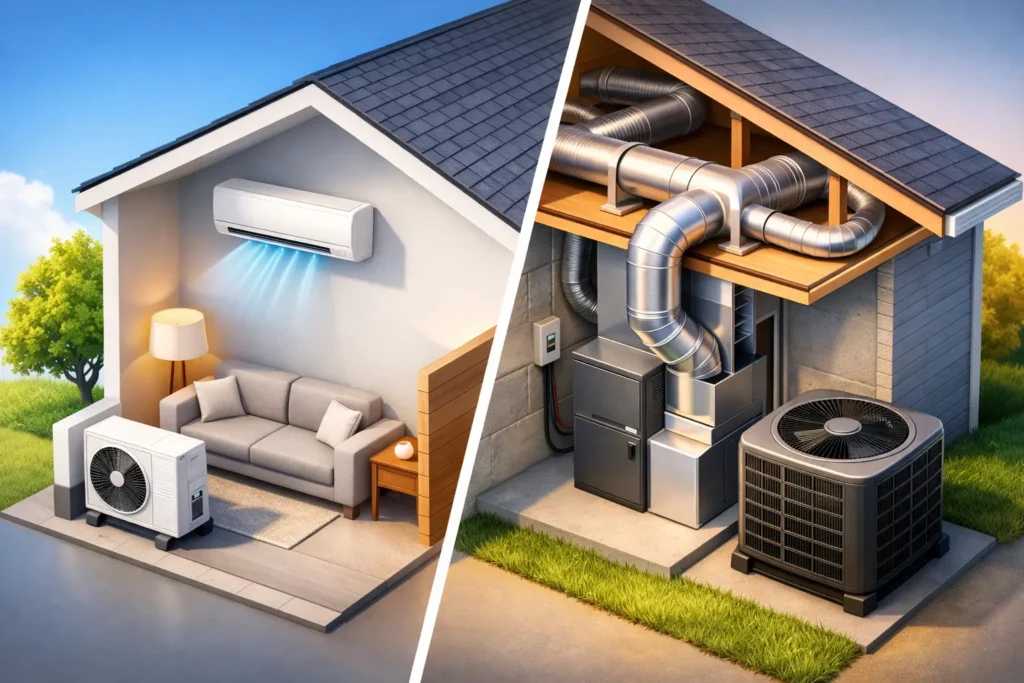
If the AC produces strong cool air near the furnace but certain rooms receive very little, ductwork may be the issue. Ducts can become disconnected, crushed, poorly insulated, undersized, or leaky. These problems are common in older homes, finished basements, additions, and renovations where the original system was never redesigned for the added space.
Duct balancing is another possibility. A home’s duct system has dampers that can direct more or less airflow to specific areas. These are usually located near the main duct trunks, not at the room registers. A technician can adjust them carefully after checking airflow and temperature differences throughout the home.
This is not a guess-and-turn exercise. Closing the wrong damper can make other rooms worse, place excess strain on the blower, or mask a larger duct design problem. If one side of your home is consistently warmer than the other, a professional airflow assessment is usually more useful than repeated thermostat adjustments.
Consider Whether the System Is Sized and Set Up Properly
An air conditioner that is too small may run for long periods and still struggle during heat waves. One that is too large may cool the home quickly but shut off before removing enough humidity, leaving rooms cool yet clammy. Both situations can make temperature differences between floors more noticeable.
System size should be based on more than square footage. A proper recommendation considers insulation levels, window area, ceiling height, home orientation, occupancy, duct capacity, and whether you are cooling a finished basement or upper-floor addition. In the GTA, humidity control is part of the comfort calculation too.
If uneven cooling started after a new installation, renovation, or thermostat replacement, call the installer. The system may need commissioning adjustments, airflow verification, thermostat configuration, or a review of the duct layout. A clear explanation of the findings and available repair options should come before work begins.
When to Call a Certified HVAC Technician
Book service if you have replaced the filter and cleared the vents but still have major temperature differences, weak airflow, ice on the equipment, unusual noises, water around the furnace or air handler, or rising hydro bills. These symptoms can point to refrigerant issues, blower motor problems, a dirty evaporator coil, electrical faults, or duct leakage.
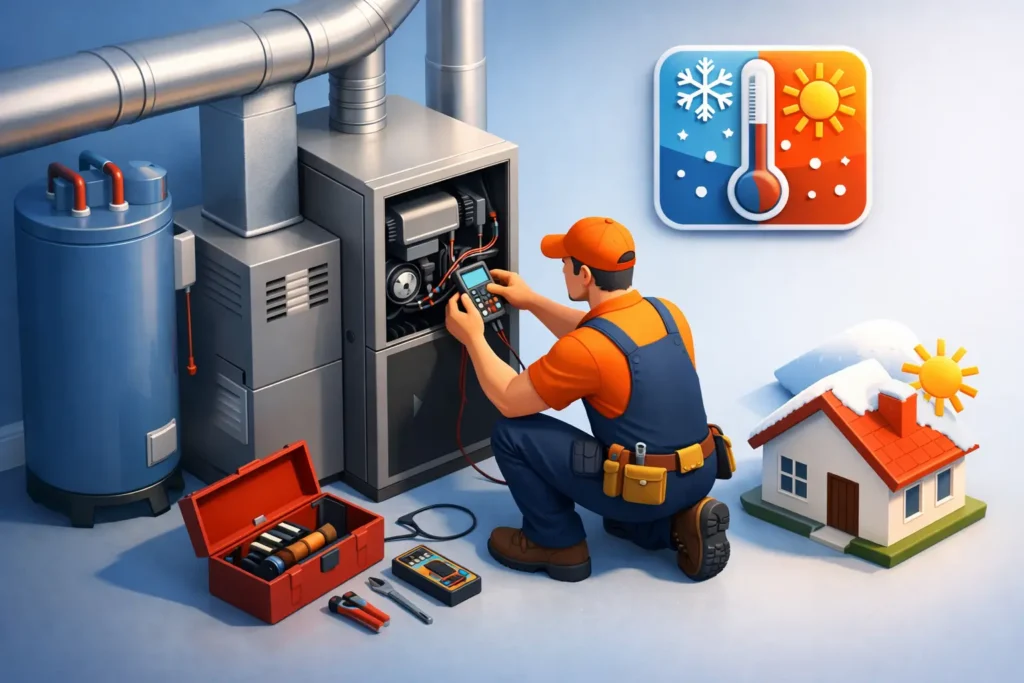
A certified technician can measure supply and return temperatures, static pressure, refrigerant performance, and airflow. Those readings identify whether the issue is with the AC unit, the furnace blower, controls, or the duct system. That approach is more reliable than replacing parts based on symptoms alone.
For homeowners across Toronto and the GTA, Easy Breezy HVAC can assess uneven cooling concerns, explain the cause in plain language, and recommend only the work needed to restore dependable comfort. Whether the answer is maintenance, a duct adjustment, a repair, or a system replacement, the right fix should suit the home and the budget.
A single warm room may be manageable with shade and a ceiling fan. A home where the second floor is consistently uncomfortable deserves a closer look – because reliable cooling should reach the rooms where your family sleeps, works, and spends time.