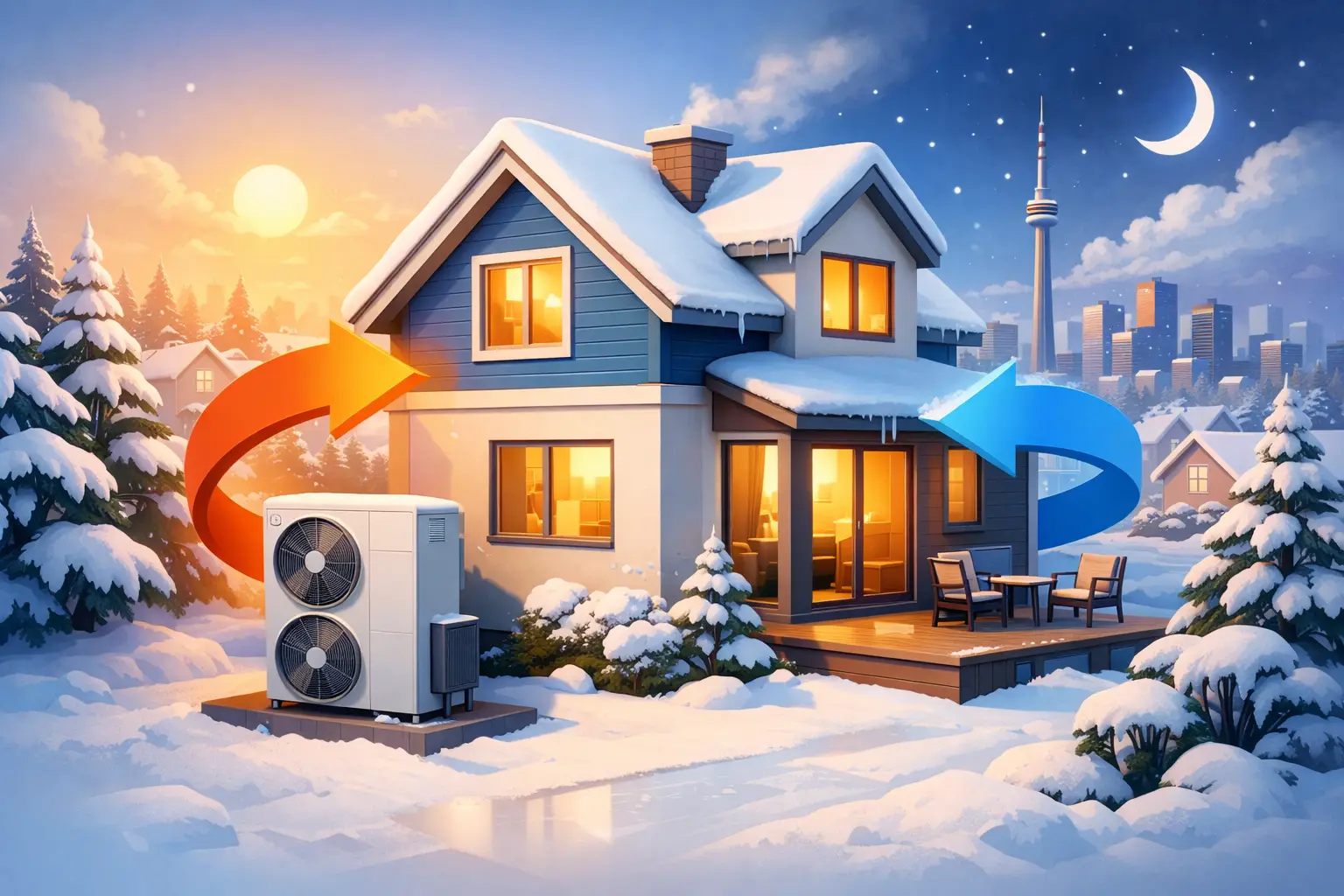
A heat pump that works well during a mild October can still disappoint when a January cold snap reaches the GTA. That is why a useful cold climate heat pump review looks beyond a high efficiency number or a low advertised price. Toronto-area homeowners need to know how a system holds capacity in low temperatures, when backup heat takes over, and whether the installation plan suits the house.
For many homes, a properly selected cold-climate heat pump can provide reliable heating through most or all of the winter while also replacing the air conditioner. It is not automatically the right choice for every property, however. The best result depends on the home’s heat loss, electrical capacity, existing heating equipment, and how the system is sized and installed.
What makes a heat pump suitable for cold weather?
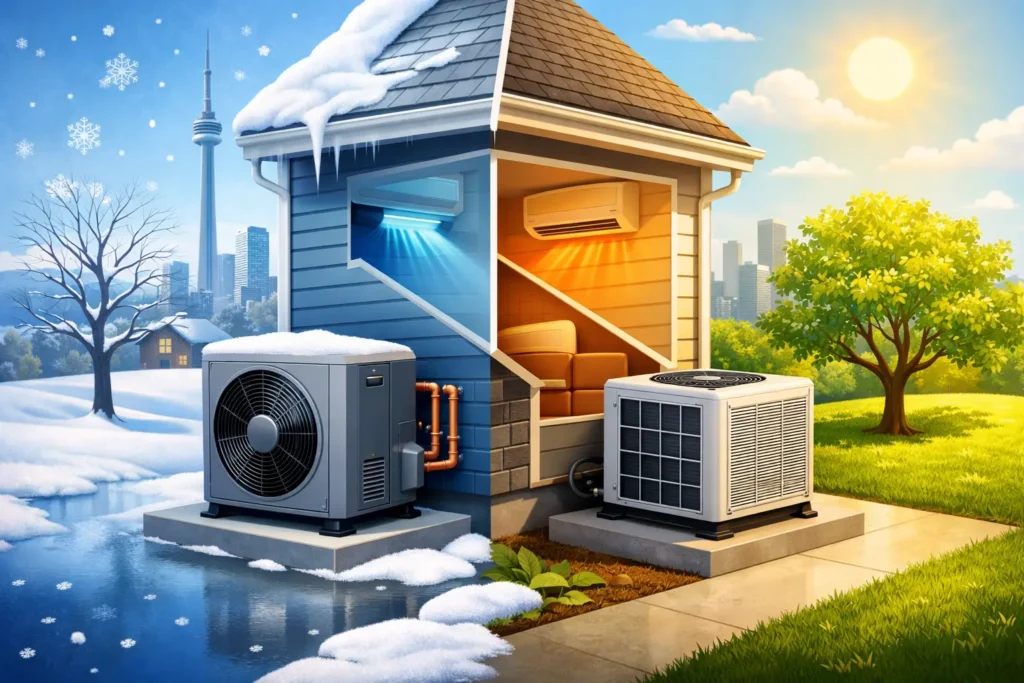
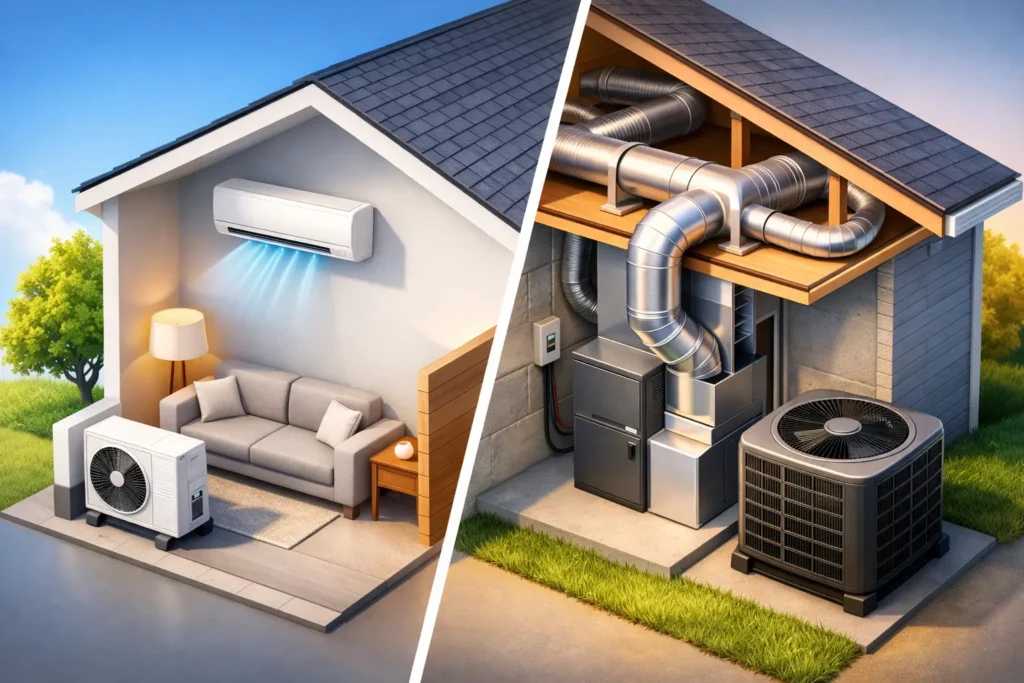
A standard air-source heat pump moves heat from outdoor air into the home. Even cold air contains heat energy, but there is less of it available as outdoor temperatures fall. A cold-climate model is designed to keep extracting useful heat and maintain stronger heating output at lower temperatures than a conventional unit.
The difference is not just a label. Cold-climate equipment typically uses inverter-driven compressors that can adjust output instead of simply switching fully on and off. This helps the system run longer at the level the home needs, which can improve comfort, reduce temperature swings, and avoid frequent cycling during milder weather.
When comparing models, look past the maximum heating capacity shown on the brochure. Ask for the unit’s heating output at lower outdoor temperatures, especially around -15 C and -25 C where applicable. A heat pump may be described as capable of operating at a very low temperature, but that does not mean it delivers its full rated capacity at that point.
Cold climate heat pump review: performance in GTA winters
The GTA has a mixed winter climate. Most days are manageable for a well-designed heat pump, but homeowners also experience damp cold, wind, freezing rain, and occasional deep cold periods. Equipment selection needs to account for those harder days rather than only the seasonal average.
A well-installed cold-climate heat pump should provide even, steady heat for long stretches of winter. The air coming from supply vents may feel less hot than furnace air because heat pumps generally operate at a lower supply-air temperature. That is normal. Comfort comes from consistent operation and stable indoor temperatures, not from a short blast of very hot air.
Defrost cycles are another normal part of winter operation. Frost can form on the outdoor coil when conditions are cold and damp. The system periodically reverses operation briefly to clear that frost. During defrost, backup heat may operate indoors so the house does not feel a cold draft. Frequent or unusually long defrost cycles can point to a setup, drainage, airflow, or service issue, but occasional defrosting is expected.
Outdoor unit placement matters more than many homeowners realize. The unit needs clearance for airflow and enough elevation and drainage to prevent ice buildup beneath it. It should not be boxed into a tight corner, buried by snow runoff, or placed where roof ice and falling snow can damage it. A certified installer should assess these details before installation day.
The real question: heat pump only or dual fuel?
A heat-pump-only system uses electricity for heating, often with electric resistance backup heat for the coldest conditions or emergencies. This approach can make sense for homes without natural gas, homes with strong insulation and air sealing, or homeowners moving toward all-electric equipment.
A dual-fuel system pairs a heat pump with a gas furnace. The heat pump handles heating during suitable outdoor conditions, while the furnace takes over below a selected balance point or when the home needs additional capacity. This can be a practical choice for GTA homes that already have a newer gas furnace, have significant heat loss, or want furnace-level heat output during extreme cold.
Neither setup is automatically better. Electricity and natural gas rates, utility charges, insulation levels, and household comfort preferences all affect operating costs. A dual-fuel system can offer flexibility, while an all-electric setup may better support a long-term electrification plan. The right recommendation should be based on numbers from your home, not a one-size-fits-all sales pitch.
Sizing matters more than the nameplate
Oversizing a heat pump is a common mistake. A larger unit does not necessarily heat the home better. If it is too large, it may cycle too often in spring and fall, remove less humidity in cooling mode, and add unnecessary equipment cost. An undersized unit may rely too heavily on backup heat during colder weather.
The starting point should be a heat-loss calculation. This considers the home’s size, insulation, windows, air leakage, ceiling height, orientation, and local design conditions. A home’s existing furnace size is not a reliable sizing shortcut. Many older furnaces were oversized from the day they were installed, and a replacement should not simply match the old input rating.
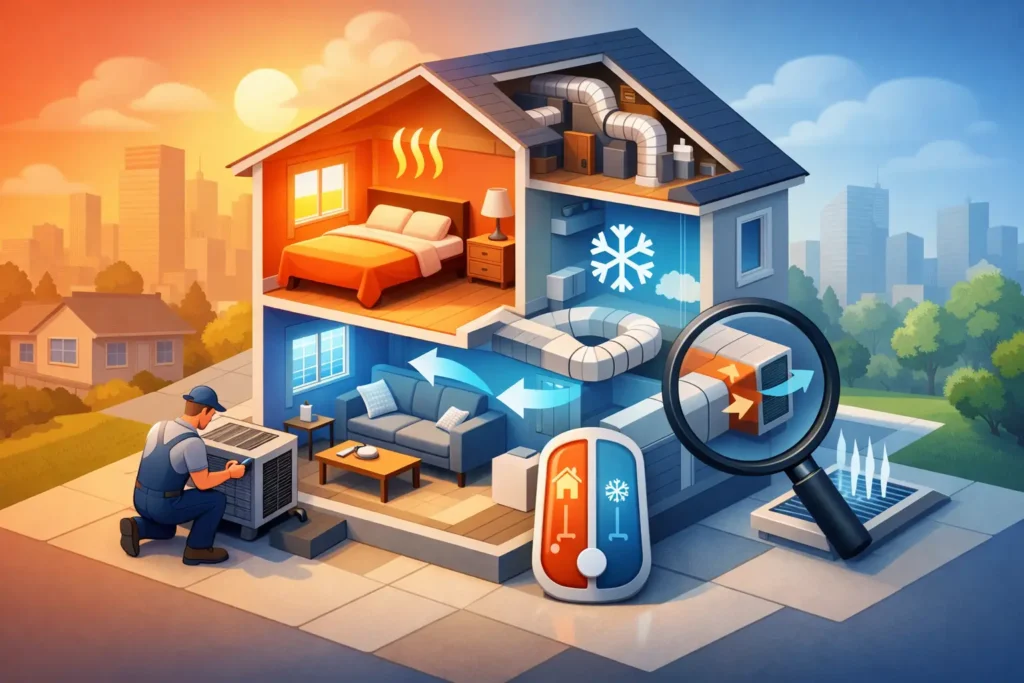
Ductwork also deserves attention. Central heat pumps need adequate airflow, properly sized return ducts, and balanced supply runs. If certain bedrooms are always cold or the second floor overheats in summer, installing a new outdoor unit alone may not solve the underlying distribution problem. In some homes, duct improvements or a ductless solution for a difficult area may be worth considering.
Efficiency ratings and what they tell you
Efficiency ratings are useful for narrowing choices, but they do not predict every home’s energy bill. In Canada, homeowners will commonly see SEER2 for cooling performance and HSPF2 for seasonal heating efficiency. Higher ratings generally indicate greater efficiency, assuming the equipment is properly matched and installed.
For winter performance, pay particular attention to low-temperature capacity and the coefficient of performance, often called COP. A COP above 1 means the heat pump is delivering more heat energy than the electricity it uses. As outdoor temperatures drop, COP declines. At some point, it may be less economical or less practical to use the heat pump alone, depending on the system design and local energy costs.
The advertised efficiency rating also assumes correct installation. Refrigerant charge, line-set sizing, airflow, electrical work, thermostat programming, and outdoor-unit location all influence actual performance. The equipment matters, but workmanship is what turns the equipment into a dependable heating system.
Costs to consider before replacing a furnace
A heat pump installation is more than the price of the outdoor unit. A complete quote should clearly explain what is included: the indoor coil or air handler, electrical work, thermostat, refrigerant piping, pad or brackets, condensate management, permits where required, and removal of existing equipment.
Some homes also need an electrical panel review, particularly for all-electric heating with resistance backup. This does not mean every house needs a panel upgrade, but it should be checked early. Finding out after equipment selection can create delays and unexpected costs.
Operating cost is equally personal. A highly efficient heat pump may reduce annual energy use, but the dollar result depends on the fuel being replaced and the home’s condition. Before making a decision, ask for a clear explanation of expected operation: when the heat pump runs, when backup heat runs, and what assumptions are being used for the estimate.
Questions worth asking an installer
A homeowner should not need to become an HVAC technician to make a confident decision. Still, a few direct questions can reveal whether the recommendation is based on the house or simply on available inventory.
Ask whether a heat-loss calculation was completed, what capacity the unit provides at low temperatures, and what backup strategy is proposed. Ask how the outdoor unit will drain during defrost, whether the existing ducts can support required airflow, and what the installed price includes. You should also understand who will service the system after installation and what labour warranty applies.
At Easy Breezy HVAC, clear equipment options and installation details help homeowners compare practical choices before committing. A good contractor should explain trade-offs plainly, answer questions without pressure, and leave you with a system that is serviceable for years to come.
A cold-climate heat pump is not a purchase to judge by efficiency ratings alone. The right system is the one sized for your home, prepared for GTA weather, and installed with enough care that you can stop thinking about it when the temperature drops.