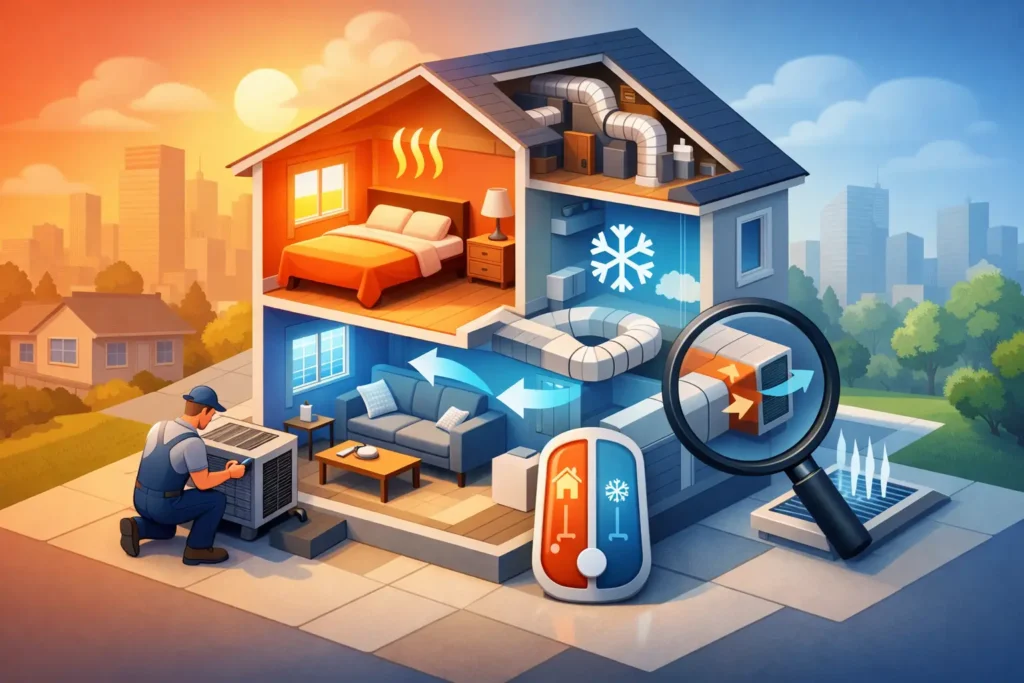

A furnace that quits on a cold Toronto night or an air conditioner that cannot keep up during a heat wave makes every decision feel urgent. But even when you need service quickly, taking a few minutes to ask the right questions can protect your home, budget, and comfort for years.
The best questions to ask an HVAC contractor are not meant to turn you into a technician. They help you confirm that the contractor understands the problem, can explain the solution clearly, and will stand behind the work after the truck leaves your driveway.
Questions to Ask an HVAC Contractor Before Booking
1. Are you licensed, insured, and qualified for this work?
Start with the basics. Ask whether the company is properly insured and whether the technician working on your equipment has the qualifications required for the job. For gas furnaces, boilers, and gas water heaters in Ontario, ask about gas technician qualifications. For electrical work connected to HVAC equipment, ask whether the work requires an electrical permit and who will handle it.
A reputable contractor should answer directly. This is not paperwork for its own sake. Incorrect gas, venting, electrical, or condensate work can create safety issues and expensive repairs later.
2. What do you believe is causing the issue?
If you are booking a repair, ask for a plain-language explanation before authorizing work. A good technician should be able to tell you what they found, what testing led them there, and whether the repair addresses the root cause or only a symptom.
For example, a furnace that is short-cycling may have a filter or airflow issue, a thermostat problem, a dirty flame sensor, or something more complex. The answer should not be a vague recommendation to replace parts until the issue goes away.
3. Is repair worthwhile, or should I consider replacement?
There is no one-size-fits-all answer. A relatively new air conditioner with a straightforward repair may be worth fixing. An older furnace with repeated breakdowns, a major component failure, or declining efficiency may be a better candidate for replacement.
Ask the contractor to compare both paths honestly. What will the repair cost? How likely is another issue in the near future? How old is the equipment, and are replacement parts still readily available? A reliable recommendation considers the condition of your specific system, not just the size of the sale.
4. What equipment do you recommend, and why?
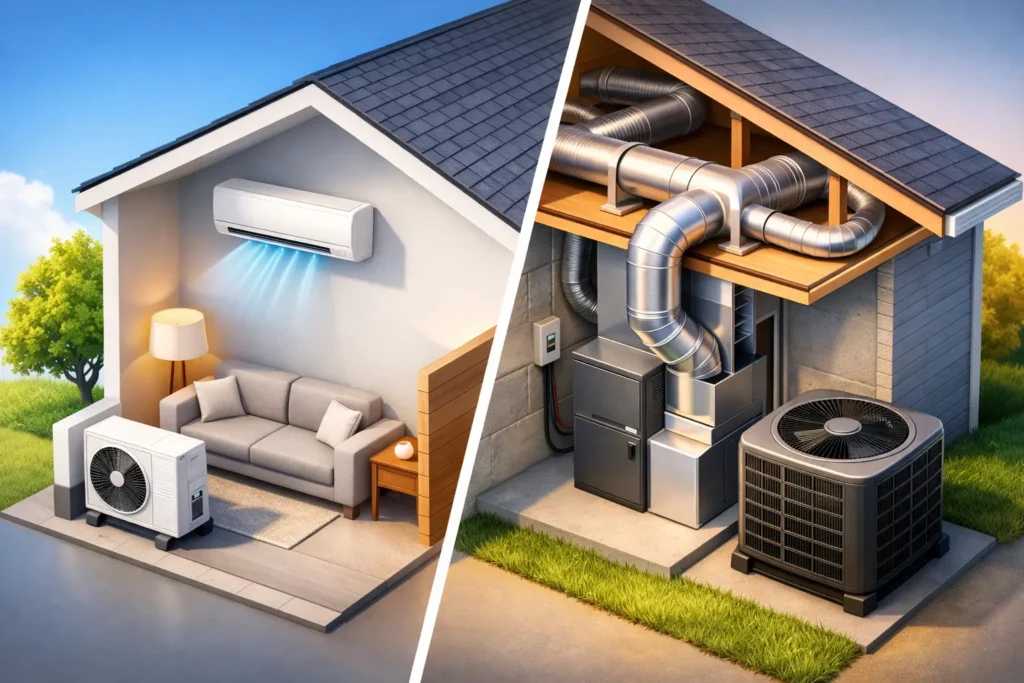
For a replacement, ask for the actual make and model being proposed. You should know whether you are comparing a single-stage or two-stage furnace, a standard central air conditioner or heat pump, and the capacity and efficiency rating of each option.
The contractor should explain why that equipment suits your home. The right choice depends on more than the square footage listed in a real estate listing. Home layout, insulation, window exposure, ductwork, family comfort preferences, and existing electrical or gas service can all affect the recommendation.
5. Has the system been sized for my home?
Oversized equipment is not automatically better. An air conditioner that is too large can cool the home quickly but may not run long enough to remove humidity effectively. An undersized system can struggle during extreme weather. Furnace sizing also affects comfort, operating costs, and equipment life.
Ask how the contractor determined the capacity. For a full replacement, a proper assessment should consider the home itself and not simply match the size of the old unit. Older equipment may have been incorrectly sized from the start, especially after renovations or insulation upgrades.
6. What is included in the quoted price?
A low quote can become much less attractive when necessary installation items appear later as extras. Ask for a clear breakdown of what is included: equipment, labour, removal of old equipment, permits where required, venting or line-set work, thermostat, start-up testing, and applicable taxes.
You should also ask what could change the price. Sometimes hidden issues are only discovered once equipment is removed, such as damaged ductwork, an outdated venting configuration, or insufficient electrical capacity. The key is to understand the likely possibilities before work begins and how approval for additional work will be handled.
7. Will you obtain permits and arrange inspections if needed?
Permits and inspections can apply depending on the type of work and equipment involved. Ask whether they are required for your installation, whether they are included in the price, and who is responsible for arranging them.
A contractor should not dismiss this question or ask you to ignore requirements to save time. Proper permits and inspections help confirm that safety-related work has been completed to the applicable standards. They can also matter when selling your home or making an insurance claim.
8. What warranty coverage do I receive?
Warranty language can be confusing, so separate it into two questions: what does the manufacturer cover, and what does the contractor cover? Parts warranties often have different terms than labour warranties. Some manufacturers also require product registration within a certain time period to receive the full coverage available.
Ask who you call if there is a problem, whether diagnostic charges apply during the warranty period, and what is excluded. A meaningful labour warranty gives homeowners added protection if an installation-related issue needs attention after the job is complete.
9. What will the installation process look like?
A clear contractor can walk you through the day. Ask how long the work is expected to take, whether you need to be home, where technicians will need access, and how they will protect flooring and work areas.
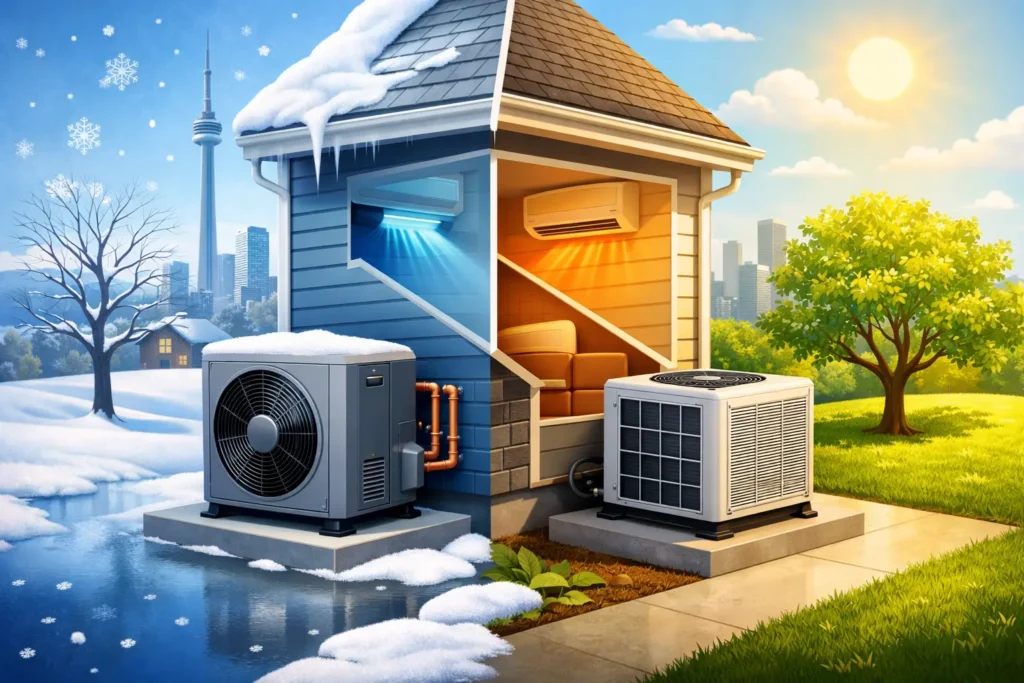
For equipment replacement, ask how the old unit will be removed and whether there will be any planned interruptions to heat, cooling, hot water, gas, or electricity. If a new heat pump or air conditioner is being installed, ask where the outdoor unit will sit and whether its location allows for proper clearance, drainage, and service access.
10. How will you test the system before you leave?
Installation is not complete when the equipment is turned on. Ask what commissioning and safety checks will be performed. This may include checking airflow, temperature rise, drainage, refrigerant operation, venting, gas connections, thermostat settings, and error codes, depending on the system.
You should also receive a basic walkthrough. The technician should show you how to operate the thermostat, where to replace filters, what normal operation sounds like, and what warning signs should prompt a service call.
11. Do you offer emergency service and follow-up support?
Heating, cooling, and hot water problems do not always happen during business hours. Ask what happens if an issue arises after the installation or repair, how quickly the company typically responds, and whether emergency service is available.
This question is especially useful when comparing contractors with similar pricing. The lowest initial cost may not offer much value if you cannot reach anyone when your furnace stops working in January or your water heater leaks on a weekend.
12. Are there maintenance needs I should plan for?
New equipment still needs care. Ask how often filters should be changed, whether annual maintenance is recommended, and what homeowner tasks can prevent avoidable service calls. A heat pump, furnace, central air conditioner, and tankless water heater each have different maintenance considerations.
Maintenance does not guarantee that equipment will never fail, but it can help identify small problems before they affect comfort or lead to a larger repair. It also gives you a better understanding of your system’s condition as it ages.
How to Compare HVAC Quotes Fairly
When comparing estimates, avoid judging them by the total alone. Put the proposed model numbers, efficiency ratings, scope of work, warranty terms, permit responsibilities, and installation details side by side. Two quotes for a “new furnace” can describe very different equipment and very different levels of workmanship.
Pay attention to how each contractor communicates before the job. Are they willing to answer questions? Do they explain trade-offs without pressure? Are they specific about what is included? Clear answers before installation are usually a good sign that you will receive clear support afterward.
For Toronto and GTA homeowners, the right contractor is one who treats your home like a real working system, not a quick equipment swap. Ask the questions, keep the written estimate, and choose the team that gives you confidence in both the recommendation and the work behind it.