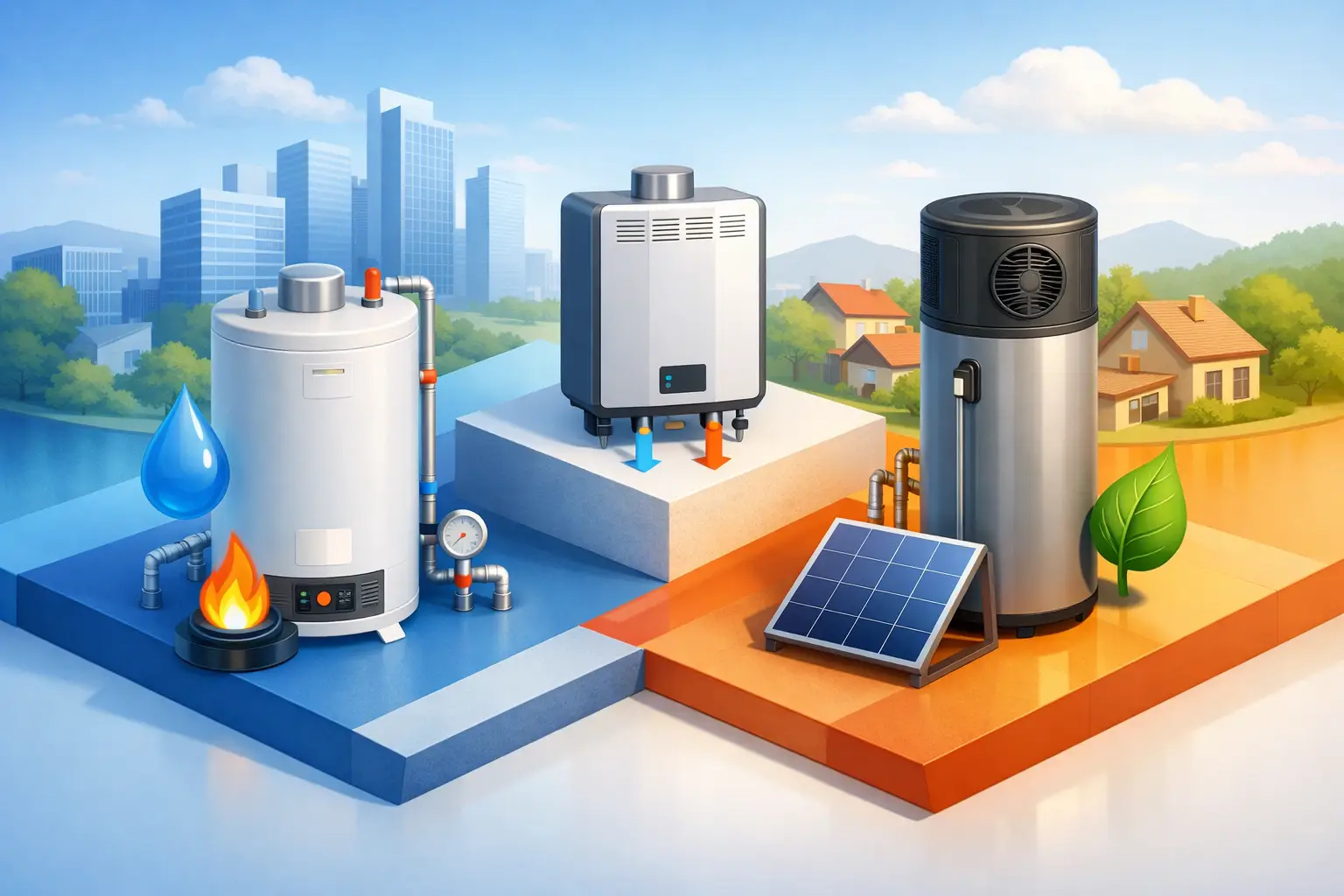
A water heater can look like a simple replacement purchase until you discover that the old unit’s venting, fuel supply, household demand and installation space all affect the right choice. Knowing how to compare water heaters helps GTA homeowners avoid paying for capacity they do not need, or choosing a model that cannot keep up with busy mornings.
The best option is rarely just the lowest equipment price or the highest efficiency number. It is the system that fits your home, delivers enough hot water when your household needs it, and can be installed properly with clear, predictable costs.
Start by comparing water heater types
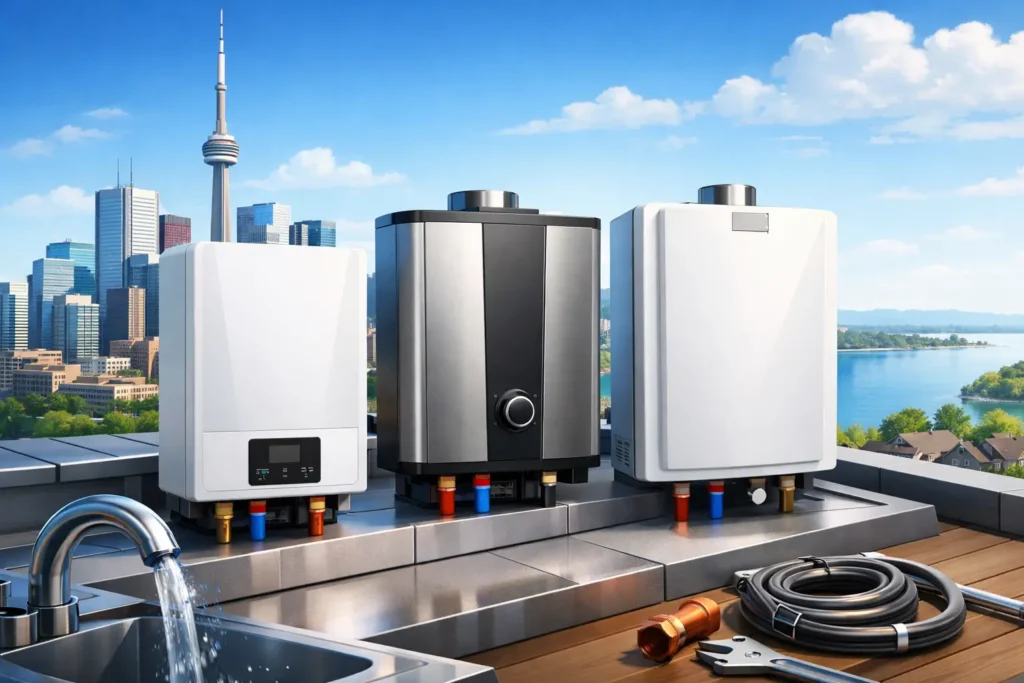
Begin with the type of system, because each one heats water differently and has different installation requirements.
A conventional tank water heater stores a supply of hot water, commonly in a 40-, 50- or larger-gallon tank. It is a familiar choice for many detached homes, straightforward to operate, and often costs less upfront than a tankless system. The trade-off is standby heat loss: the unit uses energy to maintain the water temperature even when no one is using hot water.
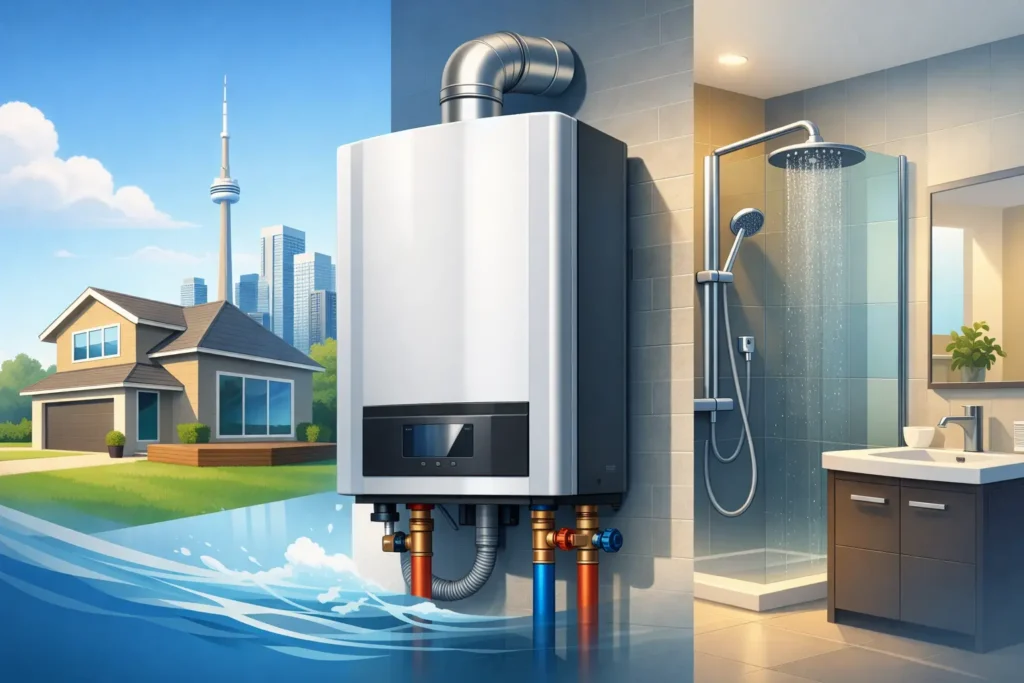
A tankless water heater heats water only when a tap, shower or appliance calls for it. This can reduce wasted energy and provide a long run of hot water, but “endless” does not mean unlimited. Its output is limited by the incoming water temperature and how many fixtures are running at once. In a Toronto winter, incoming water is colder, so a tankless unit has to work harder to deliver the same flow rate. Correct sizing matters.
An electric water heater is often practical where natural gas is unavailable or where venting a gas appliance would be difficult. It has no combustion vent, but electricity can cost more per unit of heat than natural gas, depending on local utility rates and usage.
A heat pump water heater uses electricity to move heat from the surrounding air into the tank rather than generating all the heat directly. It can be an efficient option, especially in a suitable utility room or basement. However, it needs adequate space and air circulation, can cool and dehumidify the room around it, and may be less suitable in a small enclosed area. It also has a higher upfront cost than a standard electric tank.
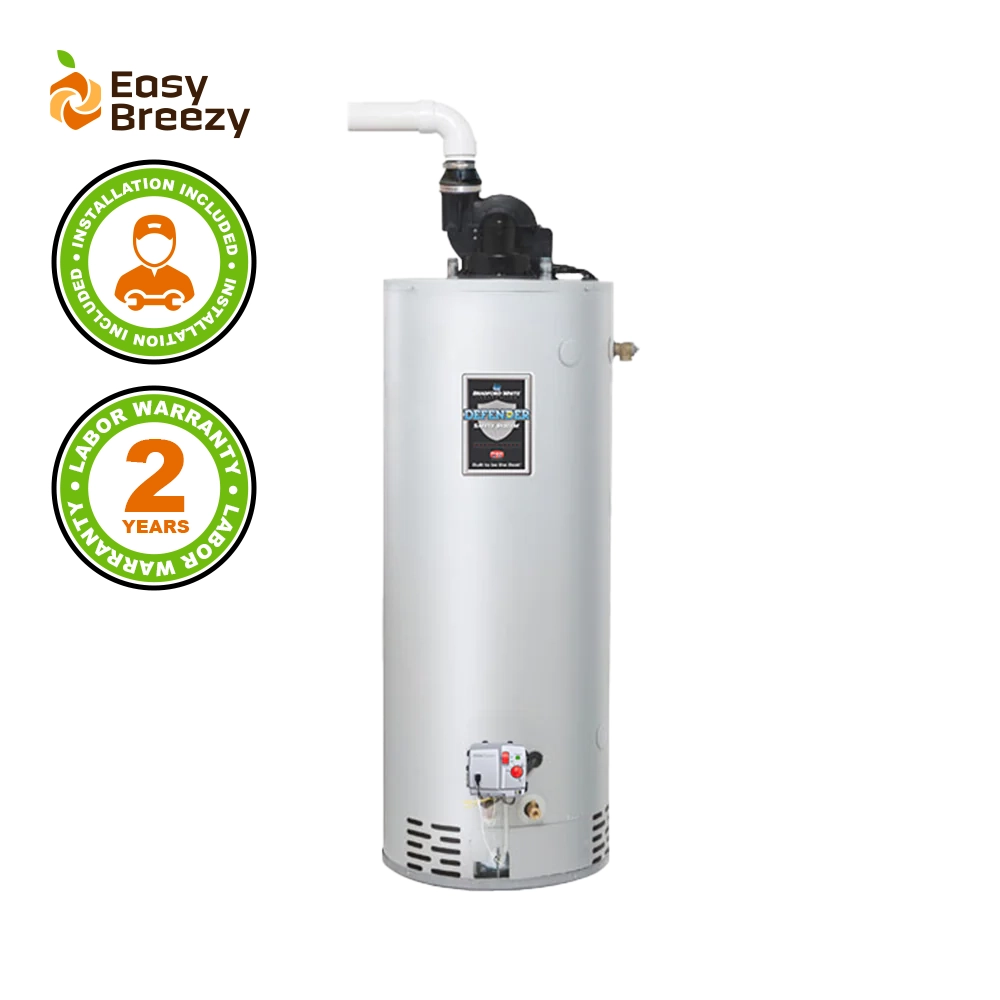
Power vent water heaters are gas tank units that use a fan to vent combustion gases through a side wall. They are often chosen when a home does not have a usable chimney vent. They offer placement flexibility, but the venting route, electrical connection and fan components must all be considered during installation.
Compare water heater capacity with real household use
A larger tank is not automatically better. It costs more to buy, occupies more room and may use more energy to maintain stored water. A tank that is too small, however, can leave the last person in the morning routine with a cold shower.
Think about peak demand rather than the number of people alone. Two adults who shower at separate times may use less hot water than a family of four getting ready for school and work within one hour. Laundry, dishwasher cycles, large soaker tubs and rainfall showers also change the calculation.
For tank models, compare both tank size and first-hour rating. The first-hour rating estimates how much hot water the unit can supply in its first hour of use, combining stored water with the heater’s recovery rate. Two tanks with the same gallon capacity can perform differently if one reheats water faster.
For tankless models, compare the flow rate at a stated temperature rise. A specification showing strong performance at a modest temperature rise may not reflect winter conditions in the GTA. A certified technician can assess your expected simultaneous use and recommend a model with enough capacity for your actual fixtures.
Check your fuel source, venting and electrical setup
This is where online product comparisons can become misleading. A water heater may be a good product but still not be the right fit for your home.
If you are replacing a natural gas tank, confirm whether the existing venting is compatible with the new unit. Older atmospheric vent systems, power vent systems and high-efficiency tankless systems use different venting methods and materials. A change in equipment type may require a new vent route, roof or wall termination, condensate drainage, gas-line upgrades or electrical work.
Tankless gas water heaters often require a larger gas line because they draw more gas while operating than a conventional tank. Heat pump water heaters need a suitable electrical supply, clearance and enough surrounding air. Electric tank heaters may require dedicated electrical capacity. In condos, space limitations, building rules and venting restrictions can narrow the options quickly.
A proper comparison includes the work needed to make the system safe and code-compliant, not just the sticker price of the appliance.
Look beyond efficiency labels
Efficiency matters, but it should be viewed alongside usage patterns and installation cost.
For gas storage tanks, compare the uniform energy factor or the manufacturer’s current efficiency rating, as well as recovery performance. Higher efficiency can lower operating costs, but the savings may be modest if your household uses little hot water or if the premium is significant.
Tankless units can be efficient because they avoid storing heated water all day. They can make sense for households with variable schedules, limited space or a strong preference for continuous hot water. Yet they also need regular maintenance, particularly flushing in areas with mineral content that can accumulate inside the heat exchanger.
Heat pump water heaters can provide substantial energy savings in the right location. Their performance depends on the temperature of the surrounding space, though. A warm, open basement or utility area is different from an unheated, tight mechanical closet. Consider the whole home effect, not only the efficiency label.
Compare installed price, not equipment price alone
When reviewing water heater pricing, ask what the number includes. A low equipment price can exclude removal of the old unit, delivery, permits, venting materials, drain-pan work, gas or electrical modifications, and disposal. Those items can materially change the final cost.
For a fair comparison, get clear answers on these four points:
- The exact make, model, size and fuel type being installed.
- All labour, standard installation materials and removal of the old water heater.
- Any expected extra work, such as venting changes, gas-line upgrades or electrical improvements.
- Warranty coverage for both the manufacturer’s parts and the installer’s labour.
Transparent installed pricing makes it easier to compare proposals without surprises. If a contractor cannot explain why one option costs more than another, it is difficult to know whether you are paying for better equipment, necessary installation work or simply an unclear quote.
Consider maintenance, lifespan and repair access
Water heaters are not maintenance-free, and the service needs vary by type. Tank units benefit from periodic inspection and, where appropriate, flushing to help manage sediment. The anode rod inside many tanks is a wearable component that can affect tank life. Tankless units typically need periodic descaling or flushing to maintain efficient operation.
Also consider whether the equipment will be accessible for future service. A tightly boxed-in water heater, inaccessible shutoff valve or poorly planned condensate line can turn routine maintenance into a bigger job. The installation should leave practical access for inspections and repairs.
Warranty terms deserve the same attention as the equipment specification. A long parts warranty is helpful, but it does not always cover diagnostic time or labour. Installation-backed labour coverage can reduce uncertainty if an issue arises after the work is completed.
Make the choice based on your home, not a sales pitch
A conventional gas tank can be the sensible choice when you want a dependable replacement with lower upfront cost and your existing setup supports it. A power vent model may be the better fit when chimney venting is unavailable. Tankless can be worthwhile for households that need long-duration hot water, want to save floor space or are already prepared for the required gas and venting upgrades. Heat pump water heaters can be compelling for homeowners focused on electrical efficiency who have the right installation space.
Before deciding, note how many people live in the home, when hot water is used, what fuel is available, where the unit will sit and whether the current heater has caused any recurring issues. Those details give a technician the information needed to recommend the right size and type without unnecessary upsells.
If your current unit is leaking, producing rusty water, making unusual noises or failing to maintain temperature, do not wait for a complete breakdown. A clear assessment from a certified local professional can show whether repair is reasonable or replacement is the more dependable path. Easy Breezy HVAC can help homeowners compare suitable options with straightforward installed pricing and an explanation of what the work involves before it begins.