A water heater can be one of the quietest drains on a household energy bill. It runs every day, whether you are thinking about it or not. The main heat pump water heater benefits are lower electricity use, reliable stored hot water, and a practical path away from fossil-fuel water heating for many GTA homeowners.
A heat pump water heater is not the right answer for every home or every installation. It needs suitable space, a way to manage condensate, and enough warm air around it to work efficiently. But when those conditions are in place, it can be a smart replacement for an older electric tank and, in some cases, a gas water heater.
How a heat pump water heater works
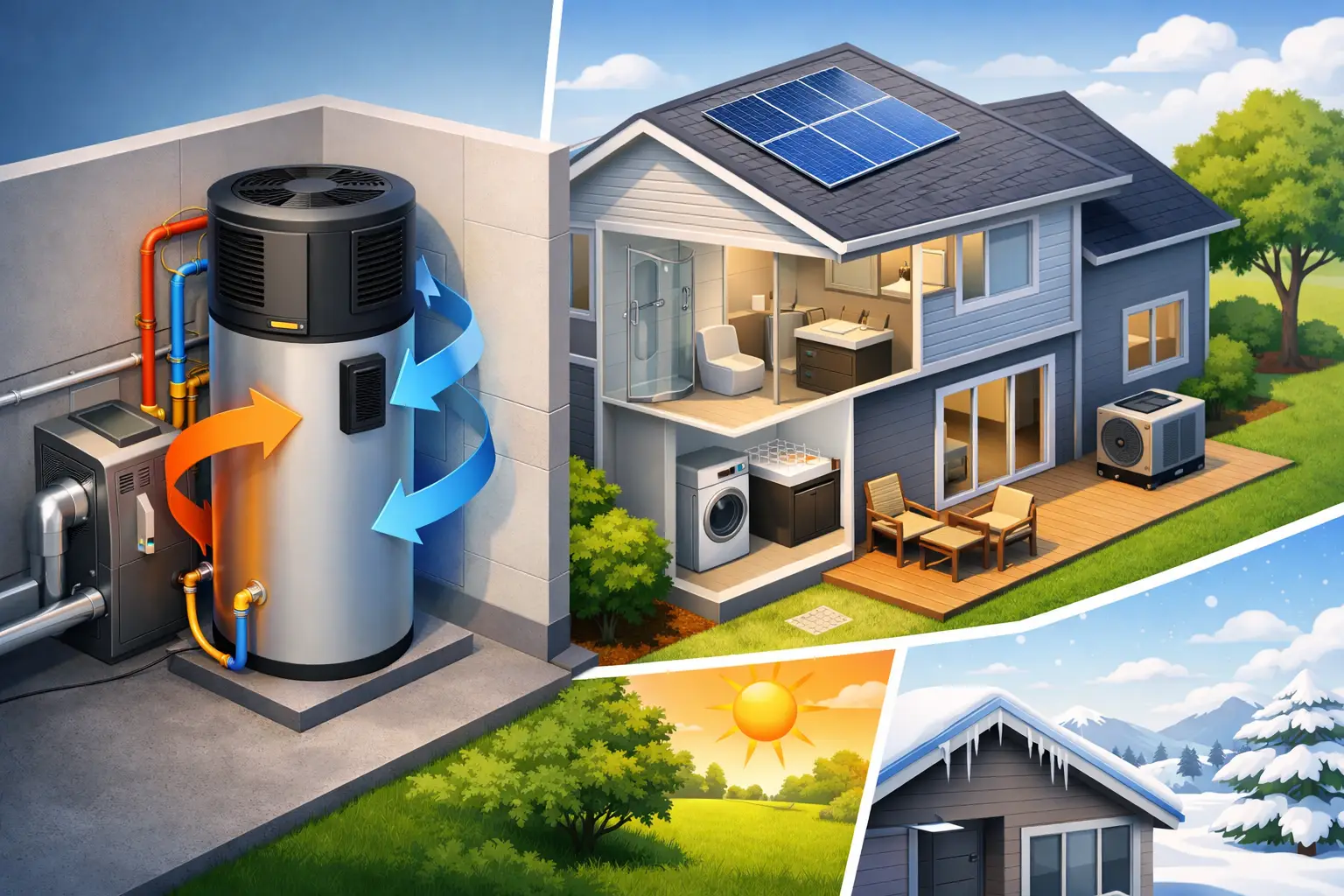
A conventional electric water heater creates heat directly with electric elements inside the tank. A heat pump water heater works differently. It draws heat from the surrounding air, moves that heat into the water tank, and uses electricity to run the heat pump rather than generating all the heat itself.
Think of it as using the same basic principle as a refrigerator, but in reverse. Instead of moving heat out of a cabinet, it pulls heat from the air in a basement, utility room, or garage and transfers it to the water. Most models also have electric resistance elements that can assist during high-demand periods or when conditions are less favourable.
That combination matters in a busy home. You get the efficiency of heat-pump operation during normal use, with backup heating available when several people need showers, laundry, and dishes handled in a short window.
The biggest heat pump water heater benefits
Lower electricity consumption
The strongest reason homeowners consider this equipment is efficiency. Because it moves existing heat instead of producing all of its heat with electric elements, a heat pump water heater can use substantially less electricity than a standard electric tank.
Your actual savings depend on the model, hot-water use, local electricity rates, tank size, and installation location. A household replacing an older electric water heater often sees the clearest operating-cost improvement. Homes switching from gas need a more careful comparison, since natural gas and electricity are priced differently and the installation scope can vary.
The key point is straightforward: a heat pump water heater is designed to make each unit of electricity do more work. For homeowners looking to control long-term utility costs, that efficiency deserves a close look.
Stored hot water for family routines
Tankless water heaters are a good fit for some homes, but they are not the only way to serve high hot-water demand. Heat pump water heaters store a full tank of heated water, which can be reassuring for families with morning shower schedules, frequent laundry, or back-to-back dishwasher cycles.
Proper sizing is essential. A tank that is too small may rely more often on its electric backup elements or leave the household short during peak demand. A properly selected unit considers the number of residents, bathrooms, appliance use, and when your home uses the most hot water.
This is where a clear recommendation matters more than simply choosing the largest tank available. Bigger equipment costs more, takes up more room, and is not always necessary.
A cooler, drier utility space
As the system pulls heat from the surrounding air, it also produces a cooling and dehumidifying effect. In a warm basement utility area, that can be a welcome side benefit. Some homeowners notice the room feels less humid during the summer.
There is a trade-off. In winter, the unit is taking heat from the space around it, so that area may become cooler. In a finished basement, a small enclosed mechanical closet, or a room that already feels cold, this effect needs to be considered before installation.
For many GTA homes, an unfinished basement utility area is a sensible location. It usually provides more air volume, practical access for service, and a place for the cooling effect to remain largely out of the living space.
Less on-site combustion
A heat pump water heater does not burn natural gas or require combustion venting. That can simplify certain replacement projects and supports homeowners who want to reduce fossil-fuel use in the home.
It also means the installation is not the same as replacing a gas tank with another gas tank. The equipment may require a suitable electrical supply, adequate clearance, and a condensate drain. Removing or disconnecting existing gas venting can also be part of the project, depending on what else uses that vent system.
A certified technician should review the full setup before providing a final recommendation. The right question is not simply, “Can this tank fit?” It is, “Will this system operate efficiently, safely, and reliably in this space?”
Where installation details make a difference
Heat pump water heaters are more sensitive to their surroundings than conventional electric tanks. They need access to enough air because that air is their heat source. A cramped closet with little airflow can reduce performance and increase noise concerns.
Most units make a low mechanical sound similar to appliances with a fan or compressor. It is not usually disruptive in an unfinished basement, but it can matter if the tank is close to a bedroom, home office, or finished recreation room. Location, clearances, and in some cases ducting options should be reviewed before choosing a model.
Condensate is another important consideration. Like an air conditioner or dehumidifier, the unit creates water as it operates. That water needs a proper drain route or condensate pump. A professional installation also checks the tank’s drain pan, pressure relief valve, electrical connection, and any local code requirements.
These details are not extras. They are the difference between equipment that simply turns on and equipment that performs properly over the years.
Is a heat pump water heater right for your home?
A heat pump water heater is often a strong option if you have an older electric tank, enough utility-room space, and a household interested in reducing electricity use over time. It can also suit homeowners replacing a gas water heater who are planning a broader move toward electric home systems.
It may be less suitable if the only available location is a very small, cold, or noise-sensitive space. Homes with unusually high hot-water demand also need careful tank sizing and a realistic discussion of operating modes. Hybrid or high-demand modes can provide faster recovery, but may use more electricity than the most efficient heat-pump-only setting.
Upfront cost is another real consideration. Heat pump models and their installation requirements can cost more than a basic electric tank. The decision should weigh the installed price, expected operating costs, household usage, available space, and how long you plan to stay in the home. If rebates are available, eligibility and deadlines should be confirmed before purchasing, not assumed.
Questions to ask before replacing your water heater
Before selecting equipment, ask whether your utility room has enough space and airflow, where condensate will drain, and whether the electrical service can support the new unit. You should also confirm the tank capacity, expected recovery performance, operating modes, warranty coverage, and the complete installed price.
For homeowners replacing a failed water heater, speed matters, but so does avoiding a rushed mismatch. A straightforward assessment can identify whether a heat pump model is practical now or whether another water-heating option better suits the home.
Easy Breezy HVAC helps GTA homeowners compare water heater options with clear explanations and transparent installed pricing. A qualified installation starts with the details of your home, not a one-size-fits-all recommendation.
If your current tank is nearing the end of its life, use the replacement decision as an opportunity to check the room, electrical setup, and your household’s real hot-water habits. The best water heater is the one that delivers dependable hot water without creating new problems in the space around it.