If your water heater is getting older and your hydro bill keeps climbing, this homeowner guide to heat pump water heaters will help you sort out whether the upgrade makes sense for your home. For many Toronto and GTA homeowners, the appeal is simple: lower operating costs, better efficiency, and a practical way to modernize hot water without guessing your way through the decision.
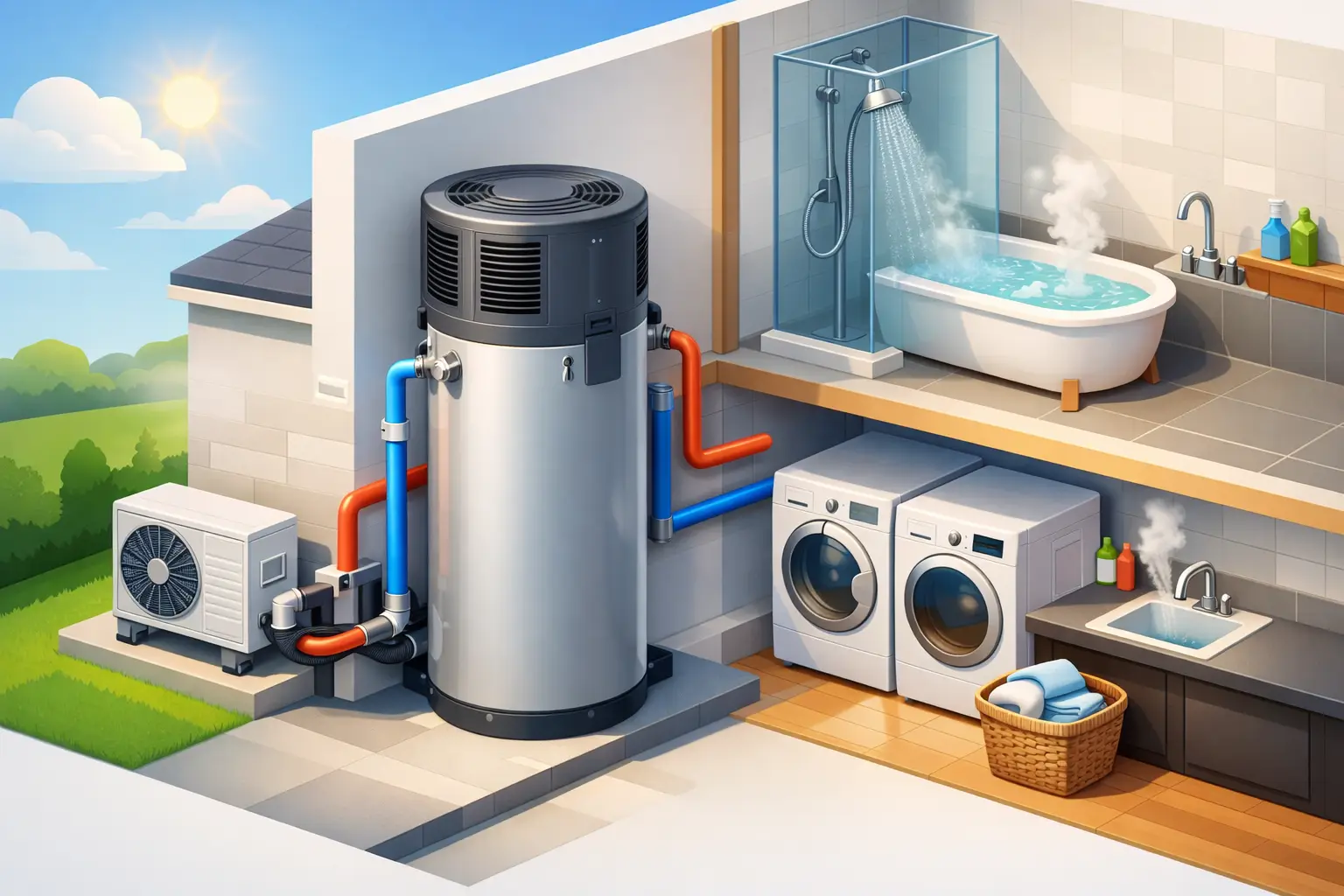
A heat pump water heater does not create heat the same way a standard electric tank does. Instead, it pulls heat from the surrounding air and moves that heat into the water tank. That transfer process uses far less electricity than electric resistance heating, which is why these systems are often described as high-efficiency water heaters.
That sounds straightforward, but real-world suitability depends on your home, your layout, and your expectations. A heat pump water heater can be an excellent fit in the right space. In the wrong space, it can be frustrating, noisy, or less efficient than you hoped.
Homeowner guide to heat pump water heaters: how they work
Think of it like a refrigerator operating in reverse. A fan draws in air, the system captures heat from that air, and the heat is transferred into the stored water. Because it is moving heat instead of generating it directly, it uses much less electricity than a conventional electric tank.
Most models are hybrid systems. That means they can run primarily in heat pump mode for efficiency, but they also include electric elements for periods of high demand or when room conditions are less favourable. For a family home, that hybrid setup matters. It gives you a balance between lower energy use and reliable hot water when demand spikes.
In practical terms, homeowners usually notice three things. First, operating costs can be much lower than a standard electric water heater. Second, the unit cools and dehumidifies the room around it while running. Third, recovery time can feel different from other tank types, depending on the mode you use and your household’s hot water habits.
Where heat pump water heaters work best
Heat pump water heaters are not one-size-fits-all equipment. They perform best in spaces with enough air volume and a steady supply of ambient warmth. In many GTA homes, that means an unfinished basement, utility room, or mechanical area with enough clearance around the unit.
If the installation space is too tight, too cold, or heavily enclosed, performance can suffer. The unit needs air to draw heat from, and it also needs room for proper airflow. A cramped closet installation that works for a conventional electric tank may not work well for a heat pump water heater.
Basements are often a good match because they usually stay within a workable temperature range and have more available space. There is also a side benefit in summer: the system can help reduce humidity in the room. That said, in winter, because the unit pulls heat from the air, it can make the surrounding area cooler. Whether that matters depends on how your home is laid out and whether the space is already conditioned.
For homeowners in Toronto, Markham, Vaughan, Mississauga, and Brampton, local housing style plays a big role. A newer home with a decent mechanical room may be a straightforward fit. An older home with limited basement clearance, finished storage areas, or tight service access may need more planning.
The main benefits for homeowners
The biggest reason people choose a heat pump water heater is lower energy use. Compared with a conventional electric tank, the savings can be significant over time. If you are replacing an older electric unit, the difference in efficiency is often the strongest argument for making the switch.
There is also the comfort of a more modern system with smart operating modes. Many units let you choose between efficiency-focused operation, standard hybrid performance, or higher-demand modes when your household needs more hot water. That flexibility is useful for families, especially when routines change.
Another benefit is that these systems can support broader electrification goals. If you are trying to reduce reliance on gas appliances where practical, a heat pump water heater may fit well into that plan. It is not the right move for every home, but for some homeowners it is part of a bigger equipment upgrade strategy.
The trade-offs most sales pages skip
This is where a homeowner guide to heat pump water heaters needs to be honest. The upfront cost is usually higher than a basic electric water heater. Installation requirements can also be more involved, depending on the location, drainage, electrical setup, and available space.
Noise is another factor. Heat pump water heaters make more sound than a standard electric tank because they use a fan and compressor. They are not usually disruptive in a proper basement mechanical area, but placement matters. If the unit is close to a living area, home office, or bedroom wall, you will want to discuss that before installation.
Recovery time can also be a concern for larger households. If several people shower back-to-back and the unit is running in a more efficient mode, hot water replenishment may feel slower than expected. Hybrid modes help with that, but homeowners should be realistic about demand.
Finally, installation conditions matter more than they do with a simpler tank replacement. Condensate drainage, service clearances, ceiling height, ducting considerations in some cases, and electrical capacity all need to be checked properly.
What to check before you buy
Start with the room. Is there enough space around the unit? Is the area generally warm enough for efficient operation? Is there a drain available for condensate? Can the room handle some cooling and sound from the equipment?
Then look at household demand. A couple with moderate water use may be very happy with an efficiency-focused setup. A larger family with frequent laundry, multiple bathrooms, and back-to-back showers may need a larger tank or a model that can switch aggressively into hybrid operation.
Electrical setup also matters. Not every replacement is plug-and-play. A proper review should confirm voltage, breaker sizing, and whether any electrical upgrades are needed. This is one reason many homeowners prefer working with a contractor who can explain the whole installation clearly before the job starts.
Cost, savings, and the real value
Most homeowners want a straight answer: is it worth it? The honest answer is that it depends on what you are replacing and how long you plan to stay in the home.
If you are replacing a conventional electric tank, a heat pump water heater often makes a strong case because the operating cost reduction can be meaningful. If you are comparing it against other water heating options, the financial picture may be less obvious and should be reviewed based on your utility costs, usage patterns, and installation conditions.
Upfront price matters, but so does risk. A lower-cost system is not always the better buy if it leads to higher monthly operating costs or if it is poorly matched to the home. Homeowners usually do best when they compare total ownership cost, installation requirements, expected savings, and warranty support rather than focusing on sticker price alone.
That is also where transparent pricing helps. When you can see actual installed options and understand what is included, it becomes much easier to compare equipment honestly instead of trying to interpret vague estimate ranges.
Installation matters more than most homeowners expect
A heat pump water heater is only as good as the installation planning behind it. Proper placement, drainage, airflow, electrical review, and setup all affect performance. Even a good unit can disappoint if it is squeezed into the wrong location or installed without enough attention to the home’s layout.
For GTA homeowners, working with certified technicians is especially important because many homes present space limitations or retrofit challenges. A dependable installer should be able to explain not just which model fits, but why it fits, what trade-offs come with that choice, and what changes may be needed before installation day.
That clear communication is often the difference between a smooth upgrade and a frustrating one. Easy Breezy HVAC Inc. approaches these projects the same way homeowners expect any major comfort purchase to be handled – with direct answers, visible options, and no guessing about what is included.
When a heat pump water heater makes sense
This type of system is often a good fit when you have enough installation space, want to reduce electricity use compared with a standard electric tank, and plan to stay in the home long enough to benefit from the efficiency savings. It also makes sense when you want a newer, more efficient hot water option and your home can support the setup properly.
It may be less appealing if your installation area is very tight, your hot water demand is unusually high for the available tank size, or the upfront budget is the only factor driving the decision. In those cases, a different water heating option may be the more practical choice.
The best equipment decision is rarely about chasing the newest product category. It is about choosing the system that fits your home, your usage, and your budget without surprises later. If a heat pump water heater checks those boxes, it can be a smart upgrade that keeps paying you back long after installation day.