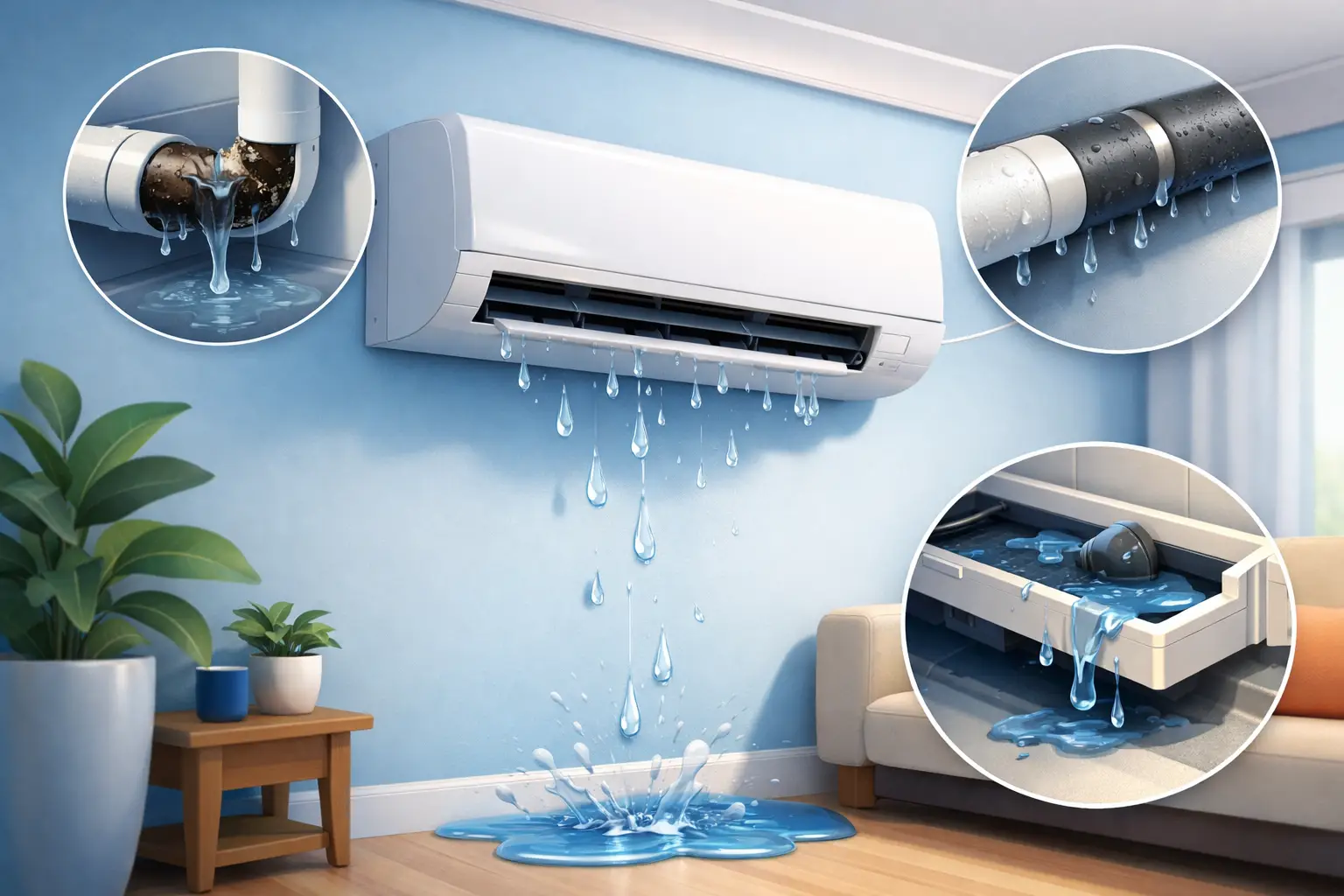
Water around your indoor AC unit usually shows up at the worst time – on a hot day, when the system is already working hard and you need it most. If you’re asking why is AC leaking water, the short answer is that something is stopping normal condensation from draining the way it should.
A central air conditioner does not just cool your home. It also pulls humidity from the air. That moisture collects on the evaporator coil, drips into a drain pan, and flows out through a condensate drain line. When any part of that process gets blocked, frozen, cracked, or overwhelmed, water can end up on the floor instead of going safely down the drain.
Why is AC leaking water inside the house?
In most homes, an AC leak is tied to one of a handful of common issues. Some are simple maintenance problems. Others point to a repair that should be handled quickly before you end up with water damage, mould, or a system breakdown.
The most common cause is a clogged condensate drain line. Over time, dust, dirt, algae, and debris can build up inside the line. When that happens, the drain backs up and the water spills out of the pan. This is especially common in the cooling season when the AC is running often and creating a steady flow of condensation.
A dirty air filter is another frequent culprit. When airflow is restricted, the evaporator coil can get too cold and freeze. Once the ice melts, it can produce more water than the drain system can handle. Homeowners are often surprised by this because the leak may start after the system shuts off or after the ice begins to thaw.
A damaged or rusted drain pan can also be the issue, especially with older equipment. If the pan has cracks or corrosion, water may drip through even if the drain line itself is clear. In some cases, the leak appears small at first and gradually gets worse.
Low refrigerant is another possibility. Low charge can lower coil temperature enough to cause icing, and when that ice melts, the excess water may overflow. This is not a maintenance item. Refrigerant problems should be inspected by a certified technician because the system may have a leak that needs repair.
Sometimes the problem is installation-related. If the unit or drain line was not set with the proper slope, water may not flow out correctly. That can happen with both newer and older systems, and it often becomes more noticeable during humid weather.
What you can check before calling for service
Not every AC water leak means a major repair, but it does mean you should act quickly. The longer the water sits, the greater the chance of damage to flooring, drywall, ceilings, or nearby materials.
Start with the thermostat. Turn the cooling setting off if you see active leaking or signs of ice on the indoor unit. Running a frozen system usually makes the problem worse. If you need some airflow while you wait, switch the fan to on. That can help thaw the coil.
Next, check the air filter. If it looks dirty, replace it. A clogged filter is one of the simplest problems to fix and one of the most overlooked. If the filter has been in place longer than recommended, replacing it is a sensible first step even if it does not solve the whole issue.
If it is safe and accessible, look at the area around the indoor unit and the condensate drain. You may be able to spot standing water, a full drain pan, or visible debris near the drain opening. Some homeowners are comfortable clearing a simple blockage with a wet-dry vacuum at the outdoor drain termination, but that depends on the system layout and how easy the line is to access.
There is a limit to DIY here, and that matters. If you see ice on the refrigerant line or coil, if the leak keeps returning, or if the system is not cooling properly, it is better to stop troubleshooting and book a professional inspection.
Why a frozen coil often leads to water leaks
A frozen evaporator coil deserves special attention because it causes a chain reaction. The coil freezes due to restricted airflow, low refrigerant, or sometimes a blower issue. While frozen, it may not leak much at all. Then the ice melts, and suddenly the drain pan gets hit with far more water than normal.
This is why some homeowners notice leaking after they shut the system off or after the house starts warming up. The leak is not always the original problem. It can be the result of another issue that has been building for days or weeks.
If you suspect freezing, do not keep resetting the thermostat lower and lower. That will not solve it. It usually adds stress to the system and can increase the amount of ice formation.
When the problem is more than normal condensation
Some water near an AC system can look harmless, but there is a difference between expected moisture and an active leak. A few drops around a drain connection after very humid weather may not mean much. A puddle, repeated dripping, stained drywall, or water in the furnace compartment is a sign that something is wrong.
In the GTA, summer humidity can push air conditioners hard. On very humid days, your system may produce a lot of condensate. A properly working drain system should still handle that load. If it cannot, there is usually an underlying issue such as a partial blockage, poor drainage slope, or a maintenance problem that has gone unresolved.
This is also where age matters. Older systems are more likely to have rusted pans, brittle drain fittings, and reduced efficiency. In some cases, a repair makes sense. In others, especially if the unit is aging and having repeated service issues, it may be more cost-effective to talk through replacement options instead of continuing with short-term fixes.
Why is AC leaking water after cleaning or maintenance?
If the leak starts after recent service, that does not automatically mean something was done wrong, but it does deserve attention. A panel may not be seated properly, the drain line may have loosened, or debris may have shifted during cleaning and exposed an existing blockage.
It is also possible that the system had multiple issues at once. For example, cleaning a dirty filter helps airflow, but if the drain line was already partly clogged, the water problem may still continue. AC problems are not always one-cause situations, which is why a full inspection matters when leaks return.
When to call a certified HVAC technician
Call for service if the leak is ongoing, the unit is freezing, cooling has dropped, or you see water near electrical components. You should also book service if the drain pan is damaged, the drain line keeps backing up, or you suspect a refrigerant issue.
A proper diagnostic should include more than just clearing visible water. The technician should inspect the filter, coil, blower performance, drain pan, drain line, safety switches, refrigerant condition, and overall system operation. The goal is not only to stop today’s leak but to explain why it happened and what will prevent it from happening again.
That straightforward approach matters. Homeowners should know whether the fix is a basic maintenance item, a repair, or a sign that the equipment is nearing the end of its useful life. At Easy Breezy HVAC, that kind of direct explanation is part of helping customers make confident decisions instead of guessing.
How to help prevent future AC leaks
Routine maintenance makes a real difference here. Replacing filters on schedule, keeping annual AC service up to date, and addressing small performance changes early can prevent many water-leak calls. If your system has had drainage issues before, it is worth asking for the condensate line and pan to be checked as part of seasonal maintenance.
It also helps to pay attention to subtle warning signs. Musty smells, weak airflow, longer cooling cycles, and occasional shutoffs can all point to a problem before water appears on the floor. Catching those issues early is usually easier on both your home and your budget.
If your AC is leaking water, do not assume it is normal and do not wait for it to stop on its own. A small puddle is often the first visible sign that your system needs attention, and dealing with it early gives you the best chance of a simple fix instead of a bigger repair later.