A tankless water heater can provide hot water for as long as you need it, but only if it is sized for the way your household actually uses water. The question is not simply, “what size tankless water heater do I need?” It is how much hot water your home needs at one time, during a Toronto winter, when the incoming water is at its coldest.
Choosing too small a unit can mean a shower that turns lukewarm when someone starts the dishwasher. Choosing the largest available model without checking the gas supply, venting, and household demand can add cost without solving the right problem. A proper recommendation looks at flow rate, temperature rise, fixture use, and the home’s existing installation.
Tankless water heater size is measured in flow rate
Storage water heaters are generally sized by tank capacity, such as 40, 50, or 60 gallons. Tankless units work differently. They are typically selected by the number of gallons per minute, or GPM, they can heat at a specified temperature rise.
Flow rate is the amount of water moving through fixtures at once. Temperature rise is the difference between the cold water entering your house and the hot water temperature you want at the tap. The colder the incoming water, the harder the heater must work and the lower its available flow rate becomes.
This matters in the GTA. In warmer months, municipal water entering the home may be relatively mild. During winter, it can be close to 4°C to 7°C. If you want water delivered at about 49°C, the unit may need to raise its temperature by more than 40°C. A tankless heater’s advertised maximum GPM is often based on a smaller temperature rise, so it should not be treated as a year-round guarantee.
Start with your peak hot-water demand
The right size is based on the busiest realistic moment in your home, not the total number of people living there. Think about the morning routine, evening bath time, or a weekend when guests are visiting. Which fixtures could run hot water at the same time?
A typical efficient shower may use 1.5 to 2.0 GPM. Older showerheads can use more. A bathroom faucet may use roughly 0.5 to 1.0 GPM, while a kitchen faucet can draw more depending on the aerator. Dishwashers and clothes washers vary by model, but they may call for hot water during a cycle.
For example, a household that commonly runs one shower and a kitchen faucet at the same time might need approximately 2.5 to 3.0 GPM of heated water. A family that may have two showers running while the dishwasher fills could need 4.5 to 6.0 GPM or more. The goal is not to add every fixture in the house. It is to identify the fixtures that are likely to operate together.
Keep in mind that fixture flow ratings do not always equal hot-water flow. Shower valves mix hot and cold water to reach a comfortable setting. Even so, planning for simultaneous demand provides a much more reliable result than choosing a heater by bedroom count alone.
A practical GTA sizing example
Consider a home with two bathrooms, a kitchen, and a family of four. Two people may shower at once, each using 2.0 GPM, while someone uses the kitchen tap at 0.8 GPM. That creates an estimated peak demand of 4.8 GPM.
At a winter temperature rise of about 40°C to 45°C, many high-output residential gas tankless units can provide roughly 4.5 to 5.5 GPM, depending on the model and installation conditions. In this situation, a smaller unit that performs well at a lower temperature rise may not keep up in January. A properly sized high-capacity condensing unit is often the more dependable choice.
That does not mean every GTA home needs the biggest unit. A condo, a one-bathroom home, or a household where only one hot-water fixture is normally used at a time may be well served by a lower-capacity model. Actual use matters more than a one-size-fits-all rule.
What size tankless water heater suits your home?
As a general starting point, a unit delivering around 3 to 4 GPM at your required winter temperature rise can work for lighter demand, such as one shower plus a faucet. A model delivering around 4.5 to 6 GPM at that same rise is more appropriate for many family homes with two simultaneous showers or a shower plus an appliance.
The manufacturer’s performance chart is the key reference. Look for the flow rate at the temperature rise your home faces in winter, rather than the highest GPM printed on the product label. A 199,000 BTU gas unit, for instance, may be marketed with a high flow rating under favourable conditions but produce considerably less flow when incoming water is cold.
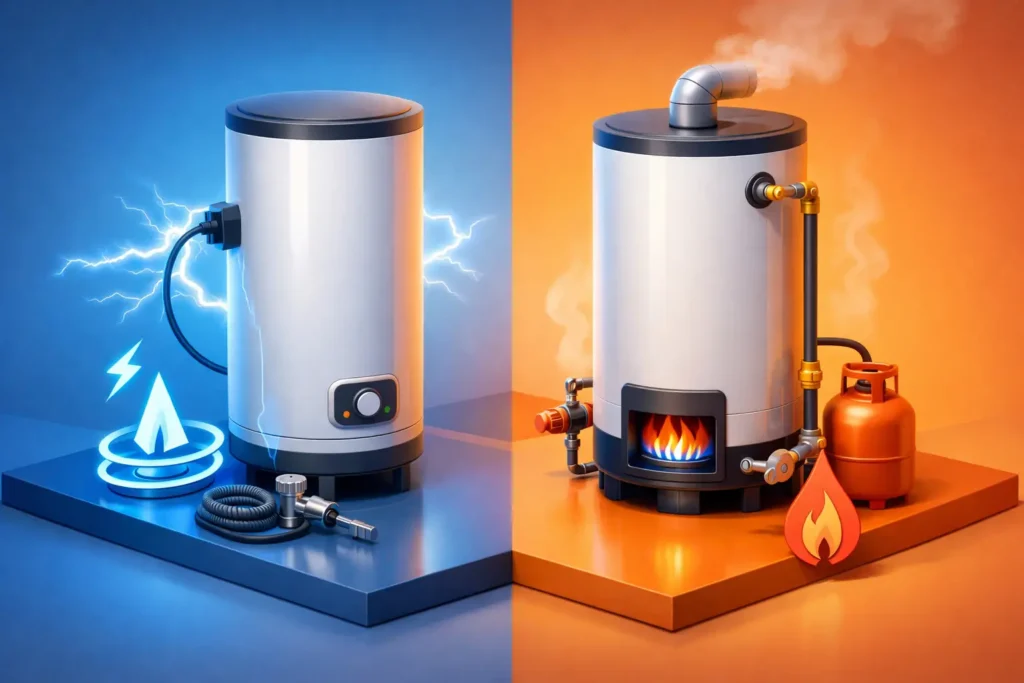
Electric tankless water heaters require the same calculation, but electrical capacity is often the limiting factor. Whole-home electric models can require substantial amperage and may not be practical without a major electrical service upgrade. For many detached and semi-detached homes in Toronto and the GTA, a gas condensing tankless system is the more realistic whole-home option where gas service is available.
The equipment around the heater matters too
Even the correctly sized tankless water heater cannot perform as intended if the supporting systems are undersized or improperly installed. Gas-fired models require adequate gas-line capacity. A high-output unit can need a larger gas line than the one serving an older tank-style water heater, especially when a furnace, range, fireplace, or barbecue line also uses the gas supply.
Venting is equally important. Condensing tankless units commonly use approved plastic venting, but the vent route, length, terminations, and condensate drainage must meet the manufacturer’s requirements and local code. A certified technician should also confirm combustion air requirements, water-line condition, shutoff access, and whether a water treatment solution is advisable.
Hard water is another consideration. Mineral scale can reduce efficiency and restrict flow inside a tankless heat exchanger over time. Water conditions vary across the GTA, so annual maintenance and periodic flushing help protect performance and support the manufacturer’s warranty requirements. If your home has known water-quality concerns, it is worth discussing filtration or conditioning before installation.
Do not size only by the old water heater
Replacing a 40- or 50-gallon tank with a tankless model is not a direct capacity swap. A tank stores a reserve of heated water, while a tankless unit produces hot water continuously within its flow limit. Your old tank may also have masked peak-demand issues by supplying stored water until it ran low.
Before replacing it, consider whether your household has changed. A renovated bathroom may have a larger showerhead. Teenagers may now shower back-to-back. A new dishwasher or laundry routine can change demand too. These details help determine whether the new system should match current use or accommodate a growing household.
Get a sizing recommendation based on real conditions
A site assessment is the safest way to select a tankless water heater. The technician should ask how many bathrooms you have, how many people use hot water at peak times, and whether multiple showers run together. They should also review the gas line, venting path, electrical supply, drainage, and available installation space before recommending a model.
Transparent pricing is helpful, but the scope should be just as clear. Ask whether the quoted installation includes required venting, gas-line upgrades if needed, condensate components, permits, removal of the old equipment, and warranty coverage. A low equipment price can become less attractive if essential installation work is excluded.
For homeowners across Toronto and the GTA, Easy Breezy HVAC can assess those details and recommend a tankless system that fits your daily demand rather than an oversized or undersized guess. The best choice is the one that delivers steady hot water through the coldest week of the year, while fitting your home’s infrastructure and your budget.